
You’re standing on the fairway, disc in hand, eyeing the basket. But have you considered how the disc’s weight shapes your game?
Delve into the technical realm where grams matter and control’s king. You’ll learn how a disc’s mass dictates its flight path, resists the wind, and influences your arm’s endurance.
It’s time to make informed choices, break free from guesswork, and harness the physics that’ll elevate your throws.
Let’s dissect the weighty decisions in disc golf together.
The Intricacies of Disc Mass
In disc golf, the mass of your disc significantly influences its aerodynamics and behavior during flight. Grasping the technicalities of material density is crucial, as it directly correlates with weight and invariably molds your disc’s trajectory.
Heavier discs, abiding by weight regulations, are more likely to withstand wind, offering a stable flight pattern. Yet, you’re not shackled by these regulations; a spectrum of weights is available, providing you the liberty to tailor your arsenal.
Selecting the optimal weight isn’t merely about adhering to rules; it’s about analyzing the course, the conditions, and throwing style. By delving into how weight impacts performance, you can make informed choices, ensuring your discs become an extension of your strategic intent on the field.
Mass and Momentum: Mastering Flight Physics
You’ve selected your disc, but the nuanced interplay between its weight and flight dynamics is critical to mastering your throws.
A heavier disc will generally offer you greater stability, especially in windy conditions, but it’s the subtle balance between speed and mass that dictates its flight path.
Analyzing these variables allows you to optimize control and distance, essential components for elevating your game.

Best choice for: Straight Line Driver, Anhyzer Shots and Roller Shots
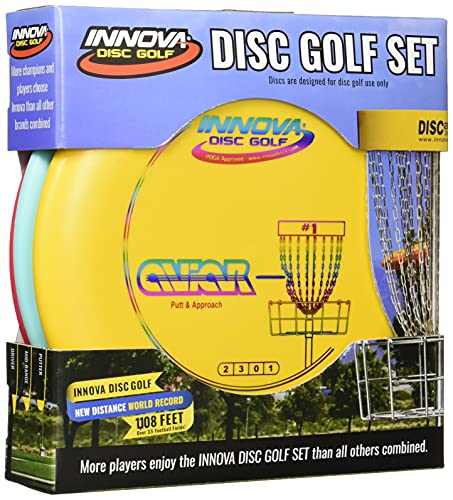
Complete Set: Includes One Driver, One Mid-Range And One Putter

Best Choice for: Turnover shots and Finesse shots
Balancing Stability and Control Through Weight Selection
Disc weight directly influences your disc’s flight stability, affecting its resistance to wind and tendency to turn or fade.
Heavier discs, with higher material density, boast greater wind resistance, offering a more predictable flight path in blustery conditions. Conversely, lighter discs are more susceptible to impacts from wind but can achieve greater distance with less power.
It’s crucial to acknowledge manufacturing inconsistencies that can cause variations in stability even among discs of identical models. As an analytical player seeking precision, you’ll understand that a disc’s weight should complement your throwing style and the specific course conditions.
Opt for a weight that maximizes control and accommodates your desired freedom in maneuvering the disc, thus tailoring your game to harness the full potential of disc stability variations.
Wind Resistance Factors
Understanding disc weight’s impact on wind resistance will arm you with the knowledge to enhance your game’s adaptability in varying weather conditions.
Heavier discs, with their increased mass, are less susceptible to the whims of a gusty day, offering a more predictable flight. They cut through the air, maintaining momentum despite the wind’s attempts at deflection.
Your grasp of drag coefficients—the measure of resistance a disc faces as it slices through the air—becomes crucial. A heavier disc generally exhibits a lower drag coefficient due to its ability to resist wind force.
Equally important are lift dynamics; heavier discs generate sufficient lift to remain aloft while minimizing unwanted altitude gains that lighter discs might experience.
Harness these principles, and you’ll dictate your disc’s flight, not the wind.
Speed Vs. Mass Effects
When choosing a disc, it’s essential to consider how its weight affects the speed and stability of its flight.
Heavier discs, with greater mass inertia, resist changes in velocity, fostering speed consistency even in adverse conditions. However, launching a heavier disc requires more energy, which can affect acceleration and ultimately, the distance it travels.
Conversely, lighter discs accelerate more readily, enhancing your ability to achieve high speeds with less effort. But don’t be misled; lighter discs can be more sensitive to release errors and wind interference due to their reduced mass inertia.
Mastery over disc selection involves a nuanced understanding of these dynamics, ensuring you’ve got the right tool to carve through the air with precision, capitalizing on the freedom to adapt your throw to any situation.
Finding Your Weight Sweet Spot for Maximum Control
In your quest for precision, selecting a disc within the 170-175 gram range often provides the optimal balance for control. Disc selection is paramount; a disc too light may flutter and veer, while one too heavy can resist your power grip, undermining your command.
Immerse yourself in the nuances of disc weights:
| Weight Class | Control Level |
|---|---|
| < 165g | Low |
| 165-169g | Moderate |
| 170-175g | High |
| 176-180g | Variable |
| > 180g | Low |
Heavier discs demand a refined technique to harness their potential. Lean into your power grip when you’re wielding these heavyweights, and you’ll discover a newfound sovereignty over your disc’s flight path that’s both liberating and precise.
Disc Weight and Wind Resistance
Harnessing the power of heavier discs, you’ll notice a marked improvement in wind resistance, crucial for maintaining your desired flight path in breezy conditions. Disc selection is paramount; a heavy disc cuts through headwinds with a steadfast trajectory, reducing the variability wind introduces.
Conversely, lighter discs are more prone to being buffeted off course. Weight myths may lead you to believe that maximum weight equals maximum control in all scenarios, but that’s a simplistic view. Instead, understand the nuanced interplay between disc weight, wind conditions, and your personal throwing style.
You’ll find that a heavier disc may grant you the autonomy to command your throws against the wind, an essential freedom when the course presents you with a meteorological challenge.
Analyzing Trade-Offs: Heavy Discs vs. Light Discs
You’ll notice that heavy discs offer more wind resistance, providing a stable flight pattern even in gusty conditions.
Conversely, lighter discs can achieve greater distances but require more finesse for control.
The trade-offs between the two will significantly shape your strategy and shot selection on the course.
Wind Resistance Variation
Choosing between heavy and light discs significantly affects how your throws combat the wind on the course. Discs are subject to weight categorization, which plays a pivotal role in wind resistance variation.
Heavier discs, with their increased mass, inherently possess a greater resistance to wind deflection, ensuring a more predictable flight path even in gusty conditions. Conversely, lighter discs can be advantageous when deploying a tailwind strategy, as they can ride the wind for added distance, but they require a deft touch to maintain control.
When you’re facing a headwind, reach for a heavier disc to maintain stability. In a tailwind, a lighter disc might provide the freedom to maximize glide and distance. Each throw in windy conditions is a calculated risk, balancing disc weight against the untamed elements.
Distance Control Differences
As you transition from managing wind resistance, it’s crucial to consider how the weight of your disc will also influence your control over distance.
Heavier discs demand a greater power to achieve the same range as lighter ones. But, in your quest for freedom on the course, know that with added weight comes enhanced flight consistency. This can be particularly advantageous in conditions where precision is paramount.
Conversely, lighter discs are more susceptible to environmental variables, yet they can soar further with less force. Your mastery of distance control hinges on a strategic balance between disc weight and the power you can reliably deliver.
Optimize your selection to suit your throwing style and the specific challenges of each hole for ultimate command over your game.
Weight Influence on Throwing Speed
During your throws, the weight of a disc significantly affects the speed at which you can launch it, with lighter discs typically allowing for faster release times.
Understanding the throwing mechanics behind disc golf, you recognize that a lighter disc demands less power requirement, translating to increased throwing speed for you—the seeker of freedom on the fairways.
Here’s a snapshot to consider:
| Disc Weight (grams) | Emotional Response |
|---|---|
| < 165 | Exhilaration |
| 165 – 175 | Determination |
| > 175 | Challenge |
As an experienced player, you analyze these figures, knowing that each weight class presents a unique opportunity to harness speed, control, and strategy, empowering you to make liberated choices that define your individual playstyle.
Adjusting Technique for Weight
Why should you adjust your throwing technique when dealing with different disc weights in disc golf?
Mastering weight calibration is crucial for optimal disc flight. Heavier discs demand a more robust release and can withstand stronger winds, but they’ll challenge your arm speed and snap.
Conversely, lighter discs require finesse and a keener sense of timing to capitalize on their glide and sensitivity to lift.
Grip adjustments are also paramount. A firmer grip is essential when hurling heftier discs to maintain control and prevent early release. Lighter discs benefit from a gentler hold, allowing for a smoother release that leverages their flight characteristics.
Tailor your technique to the disc’s weight, and you’ll unlock a new level of freedom and precision in your game.
Disc Weight Impact on Endurance
Your disc selection, particularly the weight factor, directly influences your endurance throughout a round of disc golf. Lighter discs demand less physical exertion per throw, which is a critical component in fatigue management. Throwing heavier discs can gradually wear you down, necessitating more power and energy with each shot.
Power conservation becomes paramount as you navigate the course; selecting a lighter disc can mitigate the depletion of your muscular reserves, ensuring you maintain a consistent throwing technique from start to finish.
An experienced player knows managing one’s energy is as strategic as choosing the right line. By opting for lighter discs when conditions permit, you’re not just playing the course; you’re also strategically playing the long game—preserving your stamina for those final, decisive holes.

Note: Long press the ON button for 2-3 seconds to turn on the power saving mode. After installing 3 AAA batteries, the light will be on automatically, make sure the light is on before using the remote control
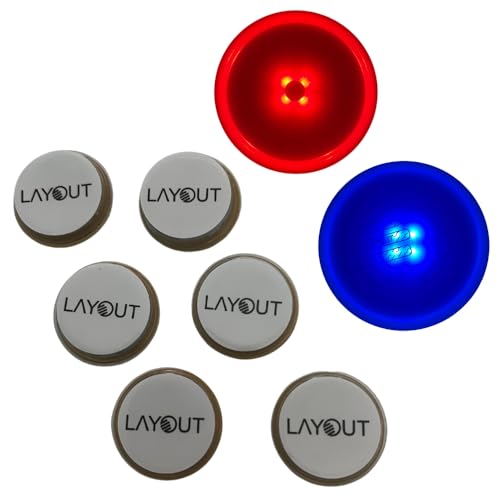
ILLUMINATION: Features bright LED lights that attach to discs, making them clearly visible during nighttime play for disc golf and ultimate frisbee
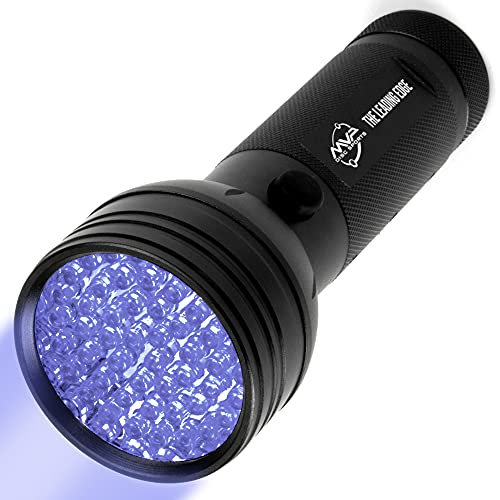
UV BRIGHT - MVP Large UV Flashlight helps detects the invisible! Food stains, bio, and pet stains on all kinds of surfaces!