
You’re on the fairway, eyeing the basket when a wild hazard looms. Do you play it safe or risk the out-of-bounds (OB) for that game-winning throw?
In disc golf, knowing when to be bold and when to hold back is crucial. This guide is packed with strategies to help you navigate those treacherous shots.
You’ll learn to analyze risks, craft savvy recovery plays, and keep your head in the game.
Time to free your inner champion and master the course!
Understanding Disc Golf Terminology
Disc golf lingo, including terms like ‘hazards’ and ‘out of bounds,’ is crucial for you to navigate the course effectively. Understanding these concepts isn’t just about avoiding penalties; it’s about strategic play.
You must analyze the flight dynamics of each throw, anticipating how the disc will behave in the air. This knowledge empowers you to make informed decisions about disc selection, which is vital in managing course risks.
Selecting the right disc is an exercise in freedom, allowing you to carve your path through the course. With a keen grasp on terminology, you’ll approach each tee with confidence, knowing that you’re equipped with the strategic insight necessary to conquer hazards and steer clear of the out-of-bounds areas that threaten your scorecard.
Scoping Out Hazards and Out-of-Bounds Lines
Every course you’ll encounter features a unique set of hazards and out-of-bounds (OB) lines that you must learn to identify to navigate effectively. Mastery in this arena gives you the freedom to craft a strategic game plan.
Start by scrutinizing the course signage; it’s your first clue to what lies ahead. These signs typically illustrate the layout and pinpoint where the OB lines run, giving you a visual framework of the battlefield.
Next, keep an eye out for hazard markers. They’re often discreet but crucial to spot. Whether it’s stakes, ropes, or painted lines, these indicators demarcate areas where your disc’s fate could turn sour. Analyze their placement and factor them into your throwing decisions.

5 Pack – Includes 5 Galactic Mini’s. Great for doubles, throwing around the house, use for mini targets and baskets, and of course to mark your lie on the course

Approximately 23 grams
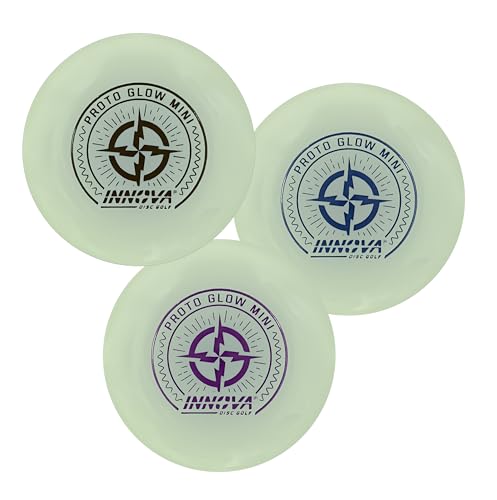
3-Pack of Proto Glow Mini’s – Includes three glow-in-the-dark minis for marking your lie, setting mini targets, baskets, or casual toss.
Analyzing Risk Versus Reward
As you stand on the tee, it’s crucial to evaluate the shot difficulty against potential gains; a tight window might lead to a birdie but also brings a bogey into play.
Consider the course design: if the next hole offers an easier birdie opportunity, playing conservatively now could pay off.
Balancing aggressive shots with strategic layups is the hallmark of a seasoned player’s game plan.
Judging Risks and Rewards of Challenging Shots
You’ll need to carefully weigh the potential gains against the possible setbacks when deciding how to tackle a challenging disc golf shot. Shot selection is pivotal; you’re free to choose your path, but a strategic mindset is crucial.
Disc choice plays a significant role as well—select a disc that complements your throwing style and the shot’s demand. Is the reward of shaving a stroke off your score worth the risk of landing out of bounds? Consider the wind, the lie, and the obstacles.
An analytical approach can reveal the subtleties of the course, guiding you to make a decision that balances ambition with prudence. Remember, freedom in your game comes from understanding the complexities and making informed choices that align with your skill level.
Course Design Considerations
Understanding the intricacies of course design is essential when weighing the risks and rewards of each shot you face. Discern the strategic obstacle placement that can either be a subtle test or a punishing barrier. Courses with cleverly varied tees can alter your approach dramatically, challenging your adaptability.
As you stand on the tee, analyze the layout: Where are the hazards? How does the fairway flow? Consider the option that provides the most freedom — a clear path that minimizes the chance of landing out of bounds while still advancing you toward the basket.
Balancing Aggression and Caution Through Strategic Shot Selection
Weighing your options before each throw, you’ll decide between aggressive plays for potential low scores and conservative strategies to avoid costly mistakes.
Aggressive play often involves power throws, harnessing your full arm speed to bridge vast distances or shape intricate lines. These daring bids can lead to glory with birdies or even eagles, but the peril of hazards looms, threatening to tarnish your scorecard.
On the flip side, conservative play prioritizes safe landings over distance. It’s a calculated approach, favoring placement over power. You’ll aim for the heart of the fairway, steering clear of boundaries and hazards.
This route may not boast the same exhilaration, but it offers control and the liberty to steadily progress without the setback of penalty strokes. Choose wisely; the balance of risk and reward defines your path to victory.
Escaping Trouble: Recovery Techniques for Tight Spots
Navigating treacherous disc golf holes and their terrain demands crafting recovery strategies that’ll keep your scorecard from bloating. To rebound from a tough spot, you must refine your throwing techniques, ensuring you’ve got a versatile arsenal at your disposal.
Whether it’s a sidearm escape or a calculated anhyzer, the ability to adapt your throw is key to maintaining freedom on the course.
Disc selection is equally crucial; a stable disc offers predictable flight paths, ideal for tight situations. Conversely, an understable disc might curve back into play when you’re flirting with out-of-bounds. Analyze your lie, consider the risk, and choose a disc that allies with your intention.
Harnessing Focus: Mental Strategies for Pressure Scenarios
As you stand on the tee, the real challenge often lies within; harnessing focus techniques is crucial for maintaining precision under pressure.
You’ve likely noticed that stress can warp your game; effective stress management strategies can be the linchpin to consistent performance.
Let’s examine how these mental tools not only prepare you for the hazards and OBs but also elevate your overall game.
Focus Techniques
While mastering the physical elements of disc golf is crucial, you’ll find that sharpening your mental focus can often make the difference between a risky shot landing safe or out of bounds.
Embrace techniques like mindfulness meditation to maintain composure under pressure. It’s not just about staying calm; it’s about being present in the moment, fully aware of the environment and your intentions.
Visualizing success before each throw is also key. See the disc slicing through the air, hugging the fairway, avoiding hazards, and nestling near the basket. This strategic foresight isn’t wishful thinking; it’s a seasoned tactic to program your mind for precision and resilience.
You’re not just playing the course; you’re outsmarting it, shot by shot.
Stress Management
You’ll need a solid strategy to manage the inevitable stress that comes with playing in high-stakes disc golf scenarios. Identifying your anxiety triggers is the first step toward gaining the upper hand. Is it the crowd, the competition, or the fear of failure that sets your nerves on edge?
Once pinpointed, you can counteract these triggers with targeted relaxation exercises. Deep breathing, visualization, and progressive muscle relaxation are all proven tactics that can soothe your mind and keep you focused on the freedom of the game, rather than the constriction of pressure.
Advancing Skills With Practice Scenarios
To master the distinction between hazards and out-of-bounds in disc golf, you’ll need to simulate challenging scenarios on the course.
Fine-tune your throwing techniques to navigate these tricky areas with precision. Disc selection becomes crucial here; using the right disc can make the difference between landing safely or finding trouble. Practice different angles and power levels to understand how your discs behave under varying conditions.
Develop a tactical mindset by creating situations where your decision-making will be tested. For instance, place your bag in a position that mimics a hazard, and work on shots that allow you to play it safe or go for the risky but rewarding throw.
With each practice session, you’re not just throwing; you’re strategizing for freedom on the course.

COMPLETE SET: This complete disc golf set from Franklin Sports is the perfect yard game for a family picnic, barbecue, or other get-together


Enhanced Grip Control – Pre-filled with high-quality chalk to help keep your hands dry and improve disc control in all weather.