
You’ve tossed a Frisbee, but have you ever ‘frolfed’? It’s the whimsical mashup of golf and flying discs that’s sparked a subculture. You’re in for a treat as we dissect the playful term ‘frolfing.’
Why’s it called that, and how did it stick? Let’s delve into its quirky origins and explore how a simple slang term evolved into the name of a sport relished for its freedom and fun. Welcome to the curious world of frolf.
The Etymology of Frolf
You’ve likely heard the term ‘frolf’ tossed around casually, but it’s actually a portmanteau, frequently used to combine ‘frisbee’ and ‘golf.’ This quirky melding reflects the game’s blend of leisurely grace and competitive precision.
As you delve into the flying etymology of ‘frolf,’ you encounter a spirited ensemble of disc debates.
Purists argue that ‘disc golf’ is the more accurate term, emphasizing the sport’s technical aspects and aligning with its professional demeanor. However, ‘frolf‘ champions a sense of liberation, capturing the whimsy of hurling a disc across an open field.
It’s a nod to the freedom you feel with the wind at your back, carving through the skies, much like the frisbee itself.
The Playful Birth of “Frolf”
As you explore the genesis of frisbee golf, you’ll uncover a tapestry of innovation and improvisation dating back to the 1960s. This era witnessed the birth of a sport that meshed the graceful arcs of disc flying with the strategic pacing of traditional golf.
Enthusiasts, yearning for the freedom of open parks and the camaraderie of competition, began sculpting the first frisbee golf courses. Course design was rudimentary, often marked by trees or improvised targets, but the challenge of navigating a landscape with a flying disc captured imaginations.
Pioneers didn’t just throw discs; they threw convention to the wind, creating an athletic expression liberated from the confines of structured sports. Frisbee golf’s inception was less about rules and regulations and more about the joy of play, a testament to the free-spirited culture it emerged from.

PDGA APPROVED: Officially approved for tournament and league play, ensuring professional-grade quality and consistent flight performance

COMPLETE SET: This complete disc golf set from Franklin Sports is the perfect yard game for a family picnic, barbecue, or other get-together

Unmatched Capacity: experience the large capacity with the disc golf bag; Designed to hold 72-80 discs across 3 spacious dividers and 10 side pockets, each divider holding 24 discs. With unfolded dimensions of L 24 x W 15 x H 10 inches, this bag is essential for home, course, or travel.
When Fun Met Sport: Frisbee Golf’s Genesis
In the realm of leisure activities, you’ll find frolfing at the crossroads of playful recreation and competitive sport. This unique blend captures the essence of disc throwing with a twist, where leisure dynamics evolve into an engaging competition.
It’s not just about the casual toss; you’re aiming for precision, strategy, and, ultimately, the satisfaction of outplaying the course. Frolfing embodies the freedom to combine a laid-back attitude with the drive to improve and excel.
You relish the open skies and the camaraderie among players, while also relishing the thrill of the game. Analyzing the trajectory of your disc, you’re not just passing time; you’re actively participating in a sport that celebrates the joy of play within the spirit of earnest competition.
From Slang Term to Legitimate Sport
Amidst the evolution of frisbee golf, you’ll discover that ‘frolfing’ originated as playful slang but has since gained legitimacy as a recognized sport.
The term, birthed from the casual banter of early enthusiasts, reflects the informal beginnings of the game. Slang origins often mirror the spirit of a subculture, and ‘frolfing’ encapsulates the laid-back vibe that defines the frisbee golf community.
However, as you delve into frisbee terminology, you’ll notice a shift from colloquialisms to standardized language that accompanies the sport’s formalization. This transition marks a maturation process, where what was once just a pastime, is now taken seriously by players worldwide.
The term ‘frolfing’ stands as a testament to this transformation, symbolizing both the sport’s playful roots and its current status as a competitive discipline.
Cultural Impact on Naming
You’ve likely noticed how pop culture can latch onto a term and catapult it into the mainstream, shaping the way we name and perceive activities like frisbee golf. This linguistic evolution isn’t just about the words themselves; it reflects broader shifts in the recreational identity of a sport as it grows in popularity.
As ‘frolfing’ caught on, it didn’t just give players a catchy name—it signaled a playful, approachable side to a game that was shedding its niche status.
Pop Culture Propels “Frolf” Mainstream
Your favorite sitcom’s playful jargon can often echo in the real world, as seen when ‘frolfing’ caught on after its adoption in popular media. The Frisbee lexicon is no stranger to the whims of pop culture, with naming trends frequently emerging from the creative wells of television and movies.
‘Frolfing’—a portmanteau of ‘Frisbee’ and ‘golf’—not only captured the essence of the sport but also carried a catchy, informal vibe that resonated with a generation yearning for laid-back recreation. This linguistic twist reflects an era’s spirit, where freedom and casual competition merge.
Your engagement with frolfing, much like the term itself, is shaped by a culture that values spontaneity, community, and, above all, fun.
The Ever-Evolving Lexicon of Leisure
As you explore the quirky world of frolfing, it’s clear that its name has evolved alongside cultural trends, embedding itself in our vernacular. The wordplay origins of frolfing reflect a blend of irreverence and creativity, hallmarks of a culture that prizes both humor and brevity.
Naming trends in sports and recreation often take a playful turn, and frolfing is no exception.
It’s a linguistic mash-up that rolls off the tongue, offering a sense of identity and community to those who participate. The term captures the essence of the game, combining the casual toss of a Frisbee with the nuanced strategy of golf, all while providing a nod to its free-spirited players.
It’s this clever concoction of words that keeps the spirit of the game alive and swinging.
Identity Beyond the Course: Community and Bonding
The moniker ‘frolfing’ not only reflects the game’s playful spirit but also signifies a shift in how recreational activities shape our language and social connections.
Digging into disc golf origins, you’ll find a rich tapestry of leisure semantics that mirrors society’s evolving attitudes towards play and freedom.
As you embrace frolfing, you’re not just tossing a disc through the park—you’re engaging with a cultural phenomenon that challenges traditional sports paradigms and carves out its own niche in the lexicon of leisure.
Frolfing’s rise goes beyond the course, influencing how communities bond and identify with each other. It’s a linguistic nod to the importance of fun, camaraderie, and a collective desire to redefine what it means to unwind and be free.
Evolution of Frolf Terminology
While you might toss a disc without a second thought, the term ‘frolfing’ has undergone a significant transformation since its inception in the playful lexicon of Frisbee golf enthusiasts. The evolution of frolf terminology isn’t just a tale of linguistic flair, but also a reflection of the community’s desire for a distinct identity.
Naming debates have circled around the sport, with purists advocating for ‘disc golf’ to reflect its seriousness, while ‘frolf’ persists among those cherishing the game’s laid-back origins. This tug-of-war in disc terminology captures the essence of a culture that values freedom—freedom to define, to express, and to evolve.
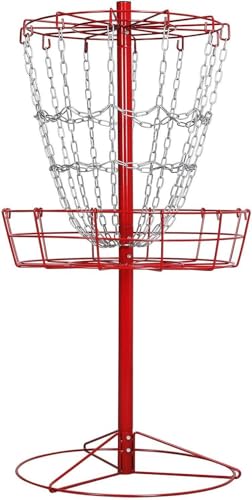
Stable & Robust: This solid basket contains 12 strands of heavy-duty chain for better catching; welded joints and big base frame strengthen the stability of this basket; comes with 3 ground stakes for double stability, no need to worry about tipping over by the hit from the disc or wind.

【Portable Disc Golf Basket & Easy-to-store】 : The size of the disc golf target is 25.6x25.6x52"/64x64x130cm, and the net weight is 31.53lbs/14.3kg.Coming with a sturdy transit bag ,so only 1 person can easily take it to the yard.

Stable & Robust: This solid disc golf target is made for the ultimate catching experience, with 12 durable galvanized chains that won't disappoint you. The welded joints and reinforced base make sure you won't have any wobbling. We even threw in 3 ground stakes to ensure double the stability!