
You’re on the course, ready to unleash a killer throw, but shoulder pain’s throwing you off your game. Don’t let it sideline you!
Dive into our evidence-based, holistic guide packed with practical tips. We’ll help you grasp the mechanics, warm up properly, and strengthen those key muscles.
Get a grip on your stance and master injury prevention to keep that freedom in your throw.
Ready for a comeback? Let’s tackle that shoulder pain together!
Grasping Throwing Mechanics to Prevent Injury
To effectively tackle shoulder pain, you need to grasp the biomechanics of a disc golf throw.
It’s essential to understand how muscle activation and the kinetic chain work in harmony.
Each throw is a complex sequence, beginning with the legs, transferring energy through the torso, and culminating in a whip-like motion of the arm and shoulder.
Proper technique hinges on the synchronized performance of this kinetic chain. When one link weakens or misfires, the risk of injury escalates.
By honing in on form and ensuring each muscle group engages correctly, you’ll not only reduce pain but also enhance your throwing power.
Proper Warm-Up Techniques
Before you hit the course, warming up with dynamic stretches can significantly reduce your risk of shoulder pain.
Dynamic stretching, unlike static stretching, involves movement-based exercises that prepare your muscles and joints for the activity ahead.
It’s essential to incorporate mobility drills that target the shoulders, arms, and back to enhance your range of motion and prevent injuries.
Think of these drills as the freedom to play without the shackles of pain.
Start with arm circles, then progress to band pull-aparts and shoulder pass-throughs with a disc or towel.
These exercises aren’t just preventative; they’re performance-enhancing.
By improving your mobility, you’re laying the groundwork for a more powerful, controlled throw.
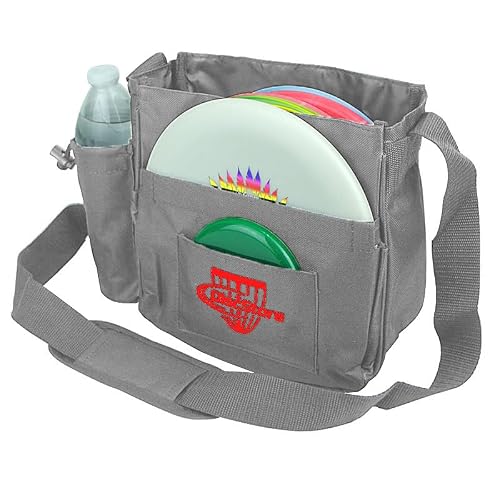
DISC GOLF BAG CAPACITY - Holds 4 to 6 discs with an efficient layout designed for quick access during fast-paced rounds.

9-11 DISC CAPACITY - A small and lightweight starter bag that still boasts the ability to hold 8-10 discs in the main compartment and 1 putter in the putter pocket.

The Aviar is a straight-flying Putt and Approach with a predictable finish. It is the most popular Putter of all time and has been used to win more World Championship titles than any other Putter.
Building Shoulder Strength for Injury Prevention
Building stronger shoulder muscles is crucial for reducing pain and improving your disc golf game.
Integrating resistance band exercises can enhance the stability and endurance of your rotator cuff, which is key to a powerful throw.
Let’s explore how targeted workouts can protect your shoulders from injury and keep you swinging with confidence.
Resistance Band Exercises
Resistance band exercises can significantly bolster your shoulder strength and enhance your disc golf throws without exacerbating pain.
When you’re choosing your bands, band selection is crucial; opt for a variety that offers different resistance levels to match your strength and facilitate progressive muscle activation.
Begin with lighter bands to warm up, focusing on controlled movements that engage the right muscles. As you progress, increase the resistance to challenge your shoulders, promoting strength and resilience.
These exercises aren’t just about brute force; they’re a holistic approach to maintaining shoulder health. By consistently integrating resistance band workouts into your routine, you’ll not only see improvements in your game but also protect yourself from potential injuries, giving you the freedom to play without the shadow of pain.
Rotator Cuff Workouts
To fortify your rotator cuff and enhance shoulder stability for disc golf, incorporate specific strengthening exercises into your fitness regimen. Focusing on the small muscles that support your shoulder joint can correct muscle imbalances, preventing injuries and improving your throw.
Start with internal and external rotation exercises using a light resistance band or dumbbells. These movements target the rotator cuff directly, promoting strength and endurance.
Incorporate exercises like shoulder ‘T’s, ‘Y’s, and ‘W’s to work on posture correction and comprehensive shoulder health. Consistently engaging in these workouts not only bolsters your rotator cuff but also contributes to overall shoulder girdle stability, ensuring you’ve got the strength and resilience to play at your best without the shadow of pain.
Perfecting Grip and Stance to Reduce Strain
To reduce shoulder strain and enhance your disc golf game, you’ll need to perfect your grip and stance.
Studies show that a proper grip technique can mitigate injury risks and improve disc control.
Meanwhile, adopting a stance that aligns with your body’s natural mechanics can significantly increase power and accuracy on the course.
Grip Technique Fundamentals
While you’re focusing on improving your disc golf game, it’s crucial that you master the fundamentals of grip technique and stance to prevent shoulder pain. Understanding grip variations and precise finger positioning can enhance your control and reduce strain on your shoulder.
A firm grip, with your fingers tightly hugging the disc, offers stability, but don’t squeeze it so hard that you introduce tension. Each finger’s role is pivotal; for instance, the index finger along the rim can guide the disc, enhancing accuracy without additional effort.
You’ll find a holistic benefit in aligning your body’s stance with your grip – it facilitates a fluid motion that respects your body’s mechanics, granting you the freedom to play unencumbered by pain.
Stance for Power, Precision
How do you align your stance with your grip to maximize both power and precision in your throw?
Stance stability is essential; it’s the foundation that supports your grip technique. Begin by grounding your feet shoulder-width apart, ensuring you’re balanced and agile. This position offers a solid base, allowing for dynamic movement while maintaining control.
Alignment focus is next. Your feet, hips, and shoulders should be aligned with your target. This creates a direct path for the disc to follow. As you reach back, shifting your weight from back to front foot, keep your movements fluid and your grip firm yet flexible.
Implementing Injury Prevention Best Practices
Before you hit the course, it’s crucial to implement injury prevention strategies to keep your shoulder safe during disc golf. Start with joint mobility exercises; these improve your range of motion and reduce stiffness, which can lead to injury.
Flexibility training is your next ally. Stretching the muscles around your shoulder, including your rotator cuff, pectorals, and deltoids, enhances flexibility and prepares your body for the dynamic movements in disc golf.
Ensure you’re warming up properly before playing. A dynamic warm-up that mimics throwing motions primes your muscles and joints, rather than static stretches alone.
Can Mastering the Left-Hand Forehand Throw in Disc Golf Help Alleviate Throwing Pain in the Shoulder?
Mastering the left-hand forehand throw in disc golf through a lefthand forehand throw tutorial can indeed alleviate throwing pain in the shoulder. Proper technique and rotation of the body can reduce strain on the shoulder, leading to smoother and more pain-free throws.
Recovery and Rehabilitation Tips
If you’re experiencing shoulder discomfort despite your pre-game routines, recovery and rehabilitation should be your next focus to restore your shoulder’s health.
Ice therapy can be particularly effective for reducing inflammation and pain after a vigorous round of disc golf. Apply a cold pack to your shoulder for 15-20 minutes, ensuring there’s a barrier between the ice and your skin to prevent frostbite.
Additionally, the massage benefits for disc golfers shouldn’t be underestimated. It promotes circulation, eases muscle tension, and can enhance your range of motion, contributing to quicker recovery.
Remember to listen to your body—if the pain persists, seek professional medical advice.

SPACIOUS AND LIGHTWEIGHT: The Dynamic Discs Trooper Backpack for disc golf is designed to hold 18+ discs, providing a lightweight and practical solution for disc golfers. Its spacious design allows players to carry all their disc golf equipment without feeling weighed down, ideal for beginners & experienced players alike.

EVERYTHING YOU NEED TO START DISC GOLFING - This set has 3 disc golf discs, a small shoulder disc golf bag, a mini and a towel, giving you all you need to begin your journey into this great sport! These will cover every shot in the game, and have you set up for success

ALL YOU NEED TO START - This disc golf beginner set contains 3 of our most popular from our entire lineup and provides you with a putter, midrange & a fairway driver. Everything you need to head out to the course. Our disc golf disc set includes some of the most widely known best disc golf discs for beginners just starting out, in an easy to throw plastic