
You’re on the brink of transforming your disc golf game. Master the right-handed backhand (RHBH) throw with pro-level precision and power.
We’ll dissect the mechanics, perfect your grip, and fine-tune your stance. You’ll learn to synchronize your run-up for maximum efficiency, channel power effectively, and nail the release point every time.
Embrace the freedom of a game-changing technique as we work through drills and analyze mistakes.
Get ready to elevate your play and enjoy unbridled performance on the course.
Understanding RHBH Mechanics
You’ll often notice that the key to a consistent RHBH (Right-Handed Backhand) throw in disc golf lies in the nuanced coordination of your entire body, from fingertips to toes.
Achieving this coordination starts with precise disc timing, a critical element that demands mental focus and deliberate practice.
Engage your lower body, ensuring your feet anchor your movements with stability and controlled rhythm. Your hips and shoulders must then synchronize, rotating in harmony to channel power efficiently.
As you uncoil, your arm whips forward, with the disc release point finely tuned to your motion.
Grip Techniques for Control
In mastering the RHBH throw, your grip is the critical link between the power generated by your body’s rotation and the disc’s flight path.
Precise finger positioning ensures stability and control; your index and middle fingers are paramount in maintaining a firm hold. For increased accuracy, adopt a power grip with all four fingers tucked tightly under the disc’s rim, your thumb applying pressure from above.
Analyzing your wrist snap is also essential. This movement impacts the spin and ultimately the disc’s trajectory. Cultivate a brisk, controlled wrist snap, synchronizing it with your arm’s extension to maximize the disc’s rotational velocity.
The confluence of an optimized grip and a well-timed wrist snap will significantly elevate your RHBH mastery.

ABOUT THE LONE WOLF - The Lone Wolf is our easiest to throw midrange. It will be a super easy disc for you to learn how to hit hyzer flip lines in the woods, or massive turnovers to carve up fairways.
![Prodigy Disc Ace Line Base Grip F Model US Fairway Driver Golf Disc [Colors May Vary] - 165-169g](https://m.media-amazon.com/images/I/41HDcJIlCZL._SL500_.jpg)
ABOUT THE F Model US - The F Model US puts a nice variety of shot shapes into a player's bag with its unique flight tendencies. The US designation for understable is apparent out of the hand thanks to its high speed turn which makes the disc drift right for a right handed backhand shot.

ABOUT THE FX-4 - The FX-4 is a fast, stable to slightly understable fairway driver. With a wider rim than our F Series, it carries more speed and pushes further down the fairway.
Stance and Posture Essentials
Your foundation in disc golf begins with balanced foot positioning; it’s critical for maintaining stability and generating power during a right-handed backhand (RHBH) throw.
You’ll need to align your upper body optimally to ensure the disc’s flight path is both accurate and controlled.
Analyze your posture regularly, as it’s the cornerstone of executing precise throws with the necessary force.
Balanced Foot Positioning
With balanced foot positioning as your foundation, you’ll harness stability and control crucial for executing powerful RHBH throws in disc golf.
Optimal weight distribution ensures your body is primed for the dynamic pivot technique required for maximum throw efficiency. Your stance should be wide enough to provide a strong base without restricting mobility.
| Aspect | Detail |
|---|---|
| Stance Width | Shoulder-width |
| Weight Balance | Evenly distributed |
| Pivot Foot | Slightly inward |
Your lead foot’s toe should point toward the target, with the heel slightly raised to facilitate a fluid pivot. The rear foot must be perpendicular to the direction of your throw, allowing your hips to rotate fully without overextending.
Master these elements, and you’ll throw with a freedom that mirrors the flight of your disc.
Optimal Upper Body Alignment
Consistently aligning your upper body properly ensures you’re leveraging every throw for maximum distance and accuracy in disc golf. Pay close attention to your shoulder rotation; it’s critical for generating power and precision.
Initiate the throw with your shoulders squared to your target, then rotate them as you move through the throw. This movement should be fluid, yet controlled.
Your arm angle also plays a pivotal role. For flat throws, keep your forearm on a horizontal plane. When adjusting for hyzer or anhyzer shots, tilt the arm angle accordingly, but always maintain a smooth motion.
The Run-Up: Timing and Execution
As you approach your throw, the run-up sequence must be meticulously timed to ensure a seamless transition into the power pocket.
Focus on synchronizing your footwork to maximize biomechanical efficiency, with each step calibrated for consistent acceleration.
Execute this phase with precision, as it lays the groundwork for the energy transfer critical to a commanding RHBH throw.
Footwork Synchronization
Your run-up technique, a crucial element in RHBH throws, must integrate precise footwork synchronization for optimal power and accuracy.
Mastering the timing and execution of your steps ensures a smooth weight shift and dynamic hip rotation. Begin with a controlled approach, focusing on the rhythm between your feet and the ground.
As you initiate the run-up, drive from the rear leg, pushing off to generate momentum. Your front foot lands toe-first, setting the stage for a fluid hip rotation. This motion should feel natural, allowing your body to coil and uncoil like a spring, harnessing energy from the ground up.
Keep your steps consistent and deliberate, ensuring each movement contributes to the buildup of torque needed for a powerful release.
Acceleration Control
During your run-up, it’s crucial to progressively increase your speed, ensuring that each step accelerates smoothly to culminate in a powerful throw.
To achieve this, focus on the mechanics of your wrist hinge. The wrist hinge is integral for snap training, which is essential for releasing the disc with maximum velocity and precision.
Fine-tune the timing of your wrist’s movement; it should snap at the end of the arm’s extension, channeling your body’s accumulated energy into the disc.
To perfect this, implement drills that isolate wrist motion, reinforcing muscle memory. Analyze your execution in terms of biomechanics, visualizing the kinetic chain as you practice.
Your objective is to create a symphony of coordinated movements that result in an explosive, yet controlled release.
Power Transfer in the Throw
To maximize your throw’s potential, focus on the seamless transfer of energy from your lower body through your torso to your arm and finally to the disc.
This kinetic chain, when executed with precision, results in optimal disc rotation—essential for distance and accuracy.
Engage your hips and legs to initiate the throw, harnessing the power from the ground up. As you rotate your hips, maintain a strong mental focus to ensure your upper body follows in a fluid motion, avoiding any energy leaks.
Your arm acts as a whip, with your elbow leading and wrist snapping at the point of release. Synchronize these movements to create a powerful, controlled throw that capitalizes on every ounce of energy for maximum flight.
Release Point Precision
Mastering the release point is crucial as it’s where the culmination of your body’s kinetic chain imparts final direction and velocity to the disc. Precision at this phase ensures your disc travels your intended path with accuracy. To maintain a consistent release point, focus on wrist angles and snap timing.
| Element | Impact on Release |
|---|---|
| Wrist Angles | Determines the disc’s angle of attack and stability. |
| Snap Timing | Influences the speed and spin rate, affecting distance and accuracy. |
| Consistent Grip | Ensures the same release point for each throw. |
| Practice Routine | Refines muscle memory for precision. |
Practice Drills for Consistency
As you refine your wrist angles and snap timing, incorporate targeted practice drills into your routine to solidify your consistency.
Begin by establishing a baseline with your disc release angles. Set up markers at various distances and aim to hit them consistently. This drill hones your ability to adjust angles for desired flight paths. Pay special attention to how each disc behaves; overstable versus understable discs will require different release angles.
Next, factor in wind considerations. Practice in varying wind conditions to understand how your disc’s flight will be affected. Adjust your throws accordingly—headwinds may necessitate a flatter release, while tailwinds can amplify the lift.
Mastering these variables through repetition will lead to a remarkable improvement in your game’s reliability.
Analyzing Common Mistakes
In your quest to perfect the RHBH throw, it’s crucial to recognize and rectify common mistakes that can undermine your technique.
A frequent issue is neglecting the wrist snap, a pivotal movement for imparting spin and stability to the disc. Ensure your wrist is firm yet flexible, snapping forward with controlled vigor as you release. This action is the linchpin for generating spin, which dictates your disc’s flight.
Another oversight is losing mental focus during your throw. Concentrate on the target and visualize the disc’s path. Any lapse can disrupt your timing and precision, leading to erratic throws. Cultivate a routine that bolsters concentration, and adhere to it diligently. Remember, mastery is in the details.

STREAMLINE STABILIZER - The Pilot is designed to be a go-to putter off the tee or on the approach! The Stabilizer has a similar hand feel and depth as the Neutron Pilot, but with a slightly raised shoulder and more pointed nose that produces a flatter and more stable putter.

ALL-DAY COMFORT: Ignite foam in these men’s golf shoes provides plush cushioning, energy return, and lasting support so every step on the course feels light and effortless.
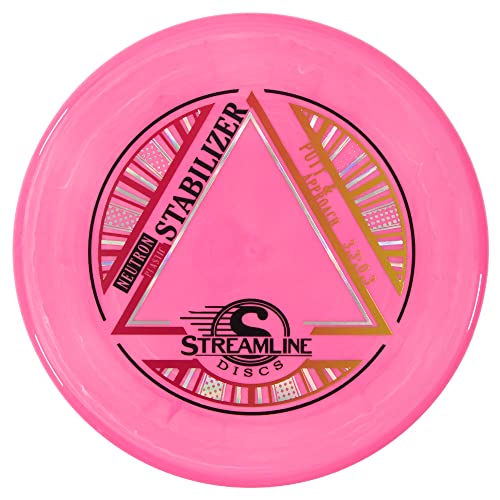
STREAMLINE STABILIZER - The Pilot is designed to be a go-to putter off the tee or on the approach! The Stabilizer has a similar hand feel and depth as the Neutron Pilot, but with a slightly raised shoulder and more pointed nose that produces a flatter and more stable putter.