
You’re on the course, disc in hand, eyeing the basket that seems just out of reach. It’s time to shatter your personal records.
With our ultimate guide, you’ll harness the secrets to propel your disc golf throws further than ever before. We’ll break down the techniques, from grip to follow-through, and give you the pro tips you need to soar past the competition.
Embrace the freedom of the flight and prepare to unleash your disc’s untapped potential.
Mastering the Grip
A firm grip on your disc is the cornerstone of maximizing throw distance in disc golf. You’ve got to balance grip pressure—squeeze too tight and you’ll stifle the disc’s flight; too loose and you’ll lose control. It’s about finding that sweet spot where your hand positioning doesn’t constrict the disc’s potential.
Place your fingers firmly underneath the disc, with the thumb applying moderate pressure on top. This creates a stable hold, allowing for a controlled release. Analyze your grip after each throw; it’s a continuous process of refinement.
Perfecting Your Stance and Alignment
Your stance sets the foundation for every throw you make in disc golf. It’s crucial to find a stance width that enhances stability while allowing for efficient weight transfer during your throw.
Let’s analyze how a balanced stance contributes to your power and accuracy. A balanced stance helps you generate more power by providing a stable base from which you can generate force. It allows you to engage your lower body muscles and transfer energy effectively through your hips and core. This transfer of energy results in increased throwing power.
Additionally, a balanced stance contributes to accuracy. When your body is balanced, you have better control over your movements and can maintain proper alignment throughout your throw. This alignment is essential for consistent and accurate releases.
To perfect your stance, start by experimenting with different widths. Find a stance that feels comfortable and stable for you. Your feet should be shoulder-width apart or slightly wider, allowing you to maintain balance and stability.
Once you find your preferred width, focus on distributing your weight evenly between both feet. Avoid leaning too far forward or backward, as this can disrupt your balance and negatively impact your throw.
Practice maintaining a balanced stance during your throws. Pay attention to your body’s alignment and how it affects your power and accuracy. Over time, with consistent practice, you’ll develop a natural and effective stance that enhances your disc golf game.

CORRECTS HAND POSITIONING ON EVERY SWING: Molded guide attaches to your club and places your fingers, thumbs, and palms in the correct neutral grip position; helps eliminate common faults like a strong grip, weak grip, or open right hand that lead to slicing and hooking

WHY SHOULD I USE A CHALK BAG? – The Hyzer Hound Discs chalk bag was designed to help disc golfers increase their grip and deal with sweaty hands during the heat of summer! Simply hit the bag on disc or rub between your hands for a could of seconds before each shot and let it take effect. It is difficult to be confident in a shot when your hands are slippery and sweaty. We will fix this for you

Stance Width Importance
Before launching your disc, ensure that the width of your stance is optimized for both stability and power. Leg positioning is critical; your feet should be shoulder-width apart, creating a solid foundation. This stance provides the balance needed while allowing for a full range of motion during your throw.
Proper hip alignment comes next; it’s the linchpin for transferring energy from your lower body through to your disc. Your hips should be aligned with the direction of your intended throw but remember, they’ll rotate during the motion. This alignment is crucial for harnessing the power generated by your legs and core.
Mastering this will give you the freedom to make those powerful, accurate shots that cut through the air, pushing your disc golf game to new heights.
Balance, Weight Transfer, and Energy Flow
Mastering the art of balance and weight transfer is essential to elevating your disc golf throws. It allows you to harness and control the energy throughout your stance and delivery. Your focus on core stability becomes the anchor, giving you the freedom to execute powerful, precise throws.
Initiate your throw by grounding your back foot, feeling the earth beneath you. This rooted stance is where you’ll draw your strength.
Engage your core as you begin the forward motion, transferring weight from back to front. It’s this momentum harnessing that translates into distance. Imagine a seamless flow of energy, like water rushing through a channel, from your feet up through your hips, and eventually to the disc.
Perfect this, and you’ll unlock new levels of performance on the course.
Optimizing the Run-Up Speed and Footwork
To elevate your game, you’ll need to harness the power of a controlled run-up. Focus on calibrating your speed to maintain balance and maximize the force behind your throw.
Then, dedicate time to refining your footwork, ensuring each step contributes to a more efficient and powerful launch.
Run-Up Speed Control
One often overlooks the importance of controlling your run-up speed, yet it’s crucial for maximizing distance in your disc golf throws.
It’s not just about how fast you move, but how you manage acceleration timing and speed consistency. Your run-up should gradually increase in speed, allowing you to harness momentum and translate it into the disc. This controlled surge is the linchpin to achieving both distance and accuracy.
To refine your run-up, focus on the rhythm of your steps. Start slower, and build speed so that your final step into the throw is the fastest. This crescendo of movement should feel natural and unforced.
Practice varying run-up speeds to find your sweet spot – the pace at which you’re both comfortable and powerful.
Footwork Efficiency Practice
Building on your run-up speed control, you’ll now fine-tune your footwork to ensure every step works in harmony with your throw.
Start by incorporating dynamic drills tailored to enhance your pivot mechanics. These repetitive practices won’t only streamline your movements but also ingrain muscle memory, crucial for consistent performance.
Focus on the precision of your steps. Don’t just go through the motions—analyze the placement of each foot, the weight transition, and the timing. If your foot lands too early or too late, it throws off your entire sequence. Practice until you can feel the rhythm of an efficient run-up without needing to watch your feet.
This is the freedom that allows for powerful, effortless throws every time you step onto the course.
The Power of Full Follow-Through
After releasing your disc, your follow-through is crucial for maximizing distance on the course. It’s not just about arm speed; it’s about the entire kinetic chain.
Your arm’s movement post-release affects the disc’s flight path and stability. A smooth follow-through ensures that the release angle remains consistent, which is vital for accuracy. Without this commitment to the motion’s end, you’ll compromise both power and precision.
To harness this power, imagine breaking through barriers with your throw. Don’t stop at the release point—push beyond it. Let your arm swing naturally to a full extension as your body rotates. This extension and rotation amplify the disc’s velocity, turning your body into a catapult for your disc.
Embrace this freedom in your movement to see your disc soar further than ever before.
Strategic Disc Selection
Selecting the right disc for the conditions and your throwing style can make a significant difference in your game.
Analyze the flight characteristics of your discs; each one’s speed, glide, turn, and fade will dictate its path through the air. A heavier disc may offer more control in windy conditions, while a lighter disc might provide that extra distance in calm weather.
Weather considerations are crucial. Tailwinds can make a disc fly farther, so you might opt for a more stable disc to ensure accuracy. Headwinds demand a disc with less turn to avoid it being overly affected. Side winds require attention to the disc’s fade; a disc with a strong fade will fight the wind better.
Strategically choose your arsenal to maximize freedom and control on the course.
Can the Techniques for Maximizing Distance in Forehand Disc Golf also Apply to Backhand Drives?
When it comes to maximizing distance with forehand throws in disc golf, many of the techniques can also be applied to backhand drives. Proper weight transfer, arm extension, and wrist snap are all fundamental to achieving distance in both forehand and backhand throws. Mastering these techniques can greatly improve overall distance on the course.
Conditioning for Power and Distance
To reach those new distances you’re aiming for, it’s essential to focus on specific conditioning exercises that enhance your throwing power and stamina.
Strength training is your ally in this quest. By building up the muscles used in disc golf, you’ll be adding the necessary force behind each throw. Don’t overlook flexibility exercises either; a limber body can move more freely, allowing for a fuller range of motion and, consequently, more powerful drives.
Here’s a table to guide your conditioning routine:
| Exercise Type | Benefits | Examples |
|---|---|---|
| Strength Training | Increases throw power | Deadlifts, Squats |
| Flexibility | Enhances range of motion | Yoga, Dynamic Stretches |
| Core Conditioning | Improves stability and form | Planks, Russian Twists |
Integrate these into your practice sessions, and you’ll soon find yourself outdistancing your previous throws.

SIZE 8-14 - Fits men's sizes 8-14 US
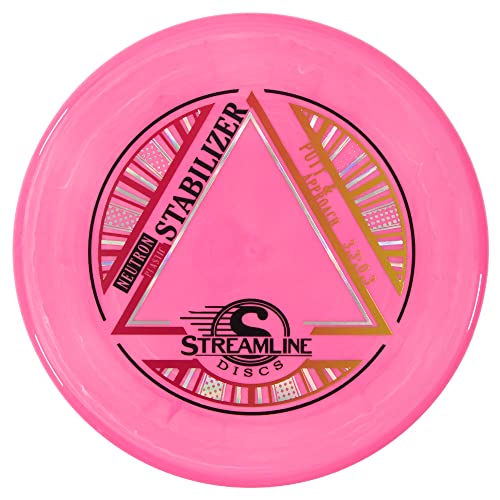
STREAMLINE STABILIZER - The Pilot is designed to be a go-to putter off the tee or on the approach! The Stabilizer has a similar hand feel and depth as the Neutron Pilot, but with a slightly raised shoulder and more pointed nose that produces a flatter and more stable putter.

Comfortable Padding: Provides medium cushioning for all-day wear