
In an age where flying discs were merely a figment of science fiction, the notion of a disc like Curve Command, designed specifically for left-turning forehand shots, would have been deemed fantastical.
Yet, here you are, standing on the precipice of innovation, with a tool that promises not only to enhance your game but to revolutionize it.
The Curve Command isn’t just another disc; it’s a meticulously crafted piece of equipment engineered for precision, control, and unmatched left-curve capability.
As you seek to master the elusive left-turning forehand, consider how this disc could alter your approach to the game, offering a level of versatility previously unattainable.
The question now isn’t if you can afford to incorporate it into your arsenal, but rather, can you afford not to explore its potential impact on your performance?
Key Takeaways
- The hyzer flip technique with an understable disc like the DX Leopard is effective for left-turning shots.
- Proper grip and wrist action are crucial for achieving accuracy and distance in forehand throws.
- Disc selection plays a significant role in achieving left-turning drives, with less stable discs being ideal.
- Mastering grip techniques, release angles, and disc placement are essential for commanding left curves with confidence.
Understanding Forehand Mechanics
To master a left-turning forehand drive, you’ll need to understand the mechanics behind the hyzer flip, wrist snap, and disc selection. Opting for an understable disc like the DX Leopard allows you to exploit the hyzer flip technique effectively. When you throw forehand, setting the disc on a hyzer release angle with a power grip is crucial. This grip gives you control and the ability to roll your wrist upon release, a pivotal move to generate the snap needed.
The wrist snap isn’t just about power; it’s about precision. It makes the disc stand up from its hyzer angle and continue left, ensuring your drive curves as intended. This action requires a nuanced range of motion, where your arm motion and wrist work in harmony, guided by proper technique.
Moreover, releasing the disc with the wing slightly up and with ample snap will guarantee that leftward drift. Remember, the mechanics of a forehand drive are about combining your arm’s motion, wrist action, and understanding of how an understable disc behaves.
Mastering these elements won’t only improve your forehand but also elevate your game to enjoy the freedom of crafting those essential left-turning shots.
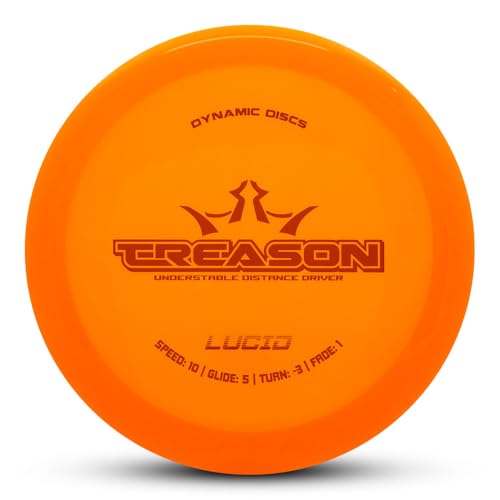
ABOUT THE TREASON - The Dynamic Discs Lucid Treason is a distance driver designed to exceed expectations for players with slower arm speeds. With its understable flight, it delivers easy distance and minimal effort, making it ideal for hyzer-flips, long turnover shots, and tailwind drives. Whether stepping up from fairway drivers or seeking a reliable bomber, the Treason offers controlled turn and a smooth finish for a variety of shots.

Designed for distance drivers and trajectory collectors who spend their time perfecting the mechanics of a smooth flip angle.

ABOUT THE PA5: Prodigy's PA-5 is an understable putter for hyzer flip drives and understable approach shots with a narrow feel for easy release, making it suitable for beginners
Choosing the Right Disc
Having grasped the intricacies of forehand mechanics, it’s crucial you select a disc that complements your technique for those elusive left-turning drives. For disc golfers today, the journey to mastering such drives involves using a less stable disc. Options like the DX Leopard, XL, TL, Beat Pro Teebird, and Valkyrie shine in this category. These discs, when released with a hyzer angle, can flip to flat or turn over slightly at high speed, providing the desired left curve.
Techniques play a pivotal role as well. A little bit more understable disc, when thrown with precision, can achieve remarkable accuracy and distance. The art of holding the disc, coupled with a controlled wrist snap, can significantly influence its flight path. Rolling the wrist over or opting for a beat Star Wraith, teaches you the nuances of Off-Axis Torque (OAT), essential for those sharp turns.
Moreover, experimenting with discs like the beat DX Panther or a seasoned ESP Nuke, under various release angles—small hyzer, flat, or slight anhyzer—unlocks new dimensions of freedom in your game. Ultimately, being able to throw with confidence and control dictates your success on the course.
Grip Techniques for Left Curves
Mastering left curves in disc golf significantly depends on your grip technique, with the stack and split grips being pivotal for control and power.
The stack grip is your go-to for unleashing power. It involves aligning your fingers tightly together on the side of the disc, maximizing force during your throw. This grip is essential when you’re aiming for distance with a powerful reach back and snap of the wrist.
On the other hand, the split grip offers nuanced control, especially with slower discs or precision upshots. By placing a finger in the disc’s rim and spreading the others on the side, you gain unparalleled control over the disc’s angle, making it easier to learn to throw with finesse. This grip is about fine-tuning your shot’s trajectory, where subtle adjustments in finger placement can significantly alter the curve.
Both grips demand a strong understanding of how your upper body movement—especially your arm and wrist—translates into disc behavior. Mastering these grips is going to show in your ability to command left curves with confidence.
Whether you’re reaching back for a powerful stack grip throw or carefully adjusting your split grip for control, your grip is the foundation of every successful left curve.
Mastering the Release Angle
After grasping the fundamental grip techniques for left curves, the next critical step is honing your release angle to precisely control your disc’s flight path. This isn’t just about arm strength; it’s about leveraging your entire body, especially your lower body, to achieve a consistent and powerful delivery. Here’s how you’re going to master this:
- Adjust your wrist position: Whether you’re aiming for hyzer, flat, or anhyzer, the wrist position is going to dictate the disc’s initial flight angle.
- Experiment with different discs: Each disc responds uniquely to release angles. Understanding this relationship is key to controlling where your disc is going to go.
- Focus on wrist snap and finger placement: A good snap, combined with precise finger placement, is what’s going to put the disc exactly where you want it.
- Practice with stable discs: Utilizing stable discs for hyzer releases will help you create the desired left-turning forehand shots in ultimate frisbee.
- Master Off-Axis Torque (OAT): OAT is a technique that, when controlled, can significantly influence your release angle.
I’m going to show you that mastering the release angle is a blend of technical skill and creativity. It’s what’s going to look like freedom in the field.
What is the Best Forehand Disc for Disc Golf Mastery?
When it comes to achieving backhand disc golf mastery, finding the best forehand disc is crucial. Look for a disc that offers a comfortable grip, reliable stability, and enhanced distance. Experiment with different weights and plastics to find the optimal forehand disc that complements your playing style and skill level.
Practicing With Purpose
To elevate your left-turning forehand throw, it’s essential to set targeted goals for each practice session, focusing meticulously on aspects like wrist snap, release angle, and follow-through. By honing in on these critical elements, you’re not just throwing; you’re crafting a technique that commands the disc to curve on your terms.
Incorporate drills that challenge your wrist snap’s precision and power. Adjust your release angle with purpose, aiming for the 45-degree sweet spot that promises an optimal left turn. Your follow-through, the grand finale of your throw, should be practiced until it’s second nature, ensuring the disc’s path aligns with your intended direction.
Recording your sessions is non-negotiable. Watching yourself on Iceberg TV, you’ll see a lot that goes unnoticed in the moment. ‘Today on Iceberg TV, I’m going to analyze my follow-through,’ should be a mantra. This self-review, coupled with feedback from seasoned golfers today on Iceberg, will illuminate areas ripe for improvement.

Straight-to-Understable Distance Driver for Maximum S-Curve Distance

Best choice for: Accurate fairway drives, Utility driver and Flex shots

Best choice for: New Players, Long Anhyzers and Roller shots