
Ready to elevate your disc golf game? You’ve got the power to master the skies, and it starts with understanding the core throws.
We’ll break down the backhand, forehand, overhead, hyzer, and anhyzer techniques, each with its unique flight pattern.
Dive into the mechanics of each throw and learn how to adapt your strategy for any course.
Embrace the freedom of choice on the field and watch your disc soar with precision and grace.
It’s time to throw like a pro.
Backhand Basics: Grip, Stance, Wrist Snap Fundamentals
Every disc golfer must master the backhand throw technique, as it’s one of the most fundamental and versatile shots in your arsenal.
To execute a proficient backhand, focus on developing your grip strength. A firm grasp on the disc ensures stability and accuracy as you initiate the throw.
Align your feet shoulder-width apart, parallel to your target line, granting you a balanced stance. As you draw your throwing arm across your body, engage your core and hips to generate power.
The pivotal moment comes with the wrist snap. This precise, accelerated motion imparts spin, adding distance and stability to the disc’s flight. Perfecting the wrist snap is key—it’s the gateway to unlocking the freedom of sending your disc soaring with control and finesse.
Flicking it Forehand: Grip Strength and Wrist Snap Mastery
While you may be comfortable with the backhand, mastering the forehand flick is essential for a well-rounded disc golf game.
To execute this throw, focus on your grip strength; it’s the cornerstone of control and power. Hold the disc with your middle finger along the bottom rim and your thumb pressed on top, ensuring a firm yet comfortable pressure.
The wrist snap is the critical component that imparts spin and speed to the disc. Practice this motion without releasing the disc to get a feel for the quick, whip-like action required. When you’re ready, combine the grip and wrist snap with a smooth forearm motion, releasing the disc at a consistent angle.
With dedication, the forehand flick will become a reliable and dynamic tool in your arsenal.

CORRECTS HAND POSITIONING ON EVERY SWING: Molded guide attaches to your club and places your fingers, thumbs, and palms in the correct neutral grip position; helps eliminate common faults like a strong grip, weak grip, or open right hand that lead to slicing and hooking

Training grip provides the correct hand position for the right golf grip
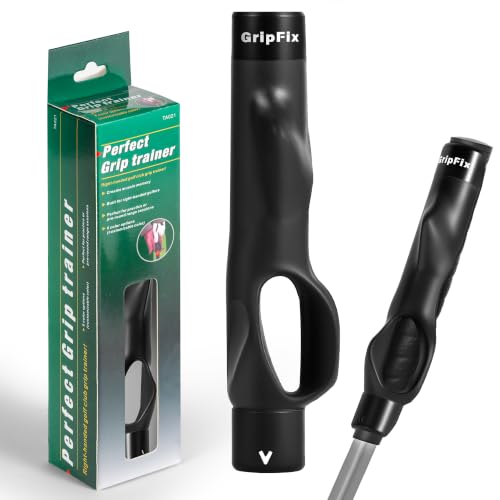
STOP SLICING & HOOKING INSTANTLY — Most inconsistent shots start with a bad grip. GripFix's precision-molded guides lock your left and right hands into the correct neutral position on every swing. Build muscle memory that eliminates weak grips, overlapping fingers, and palm misalignment — the fastest way to straighten your drives and gain shot confidence without expensive lessons.
Overhead Throws: Tomahawks, Thumbers, Scoobers and Pancakes
Building on your forehand skills, you’ll find that overhead throws open up new angles and trajectories on the course. Mastering the Tomahawk grip and perfecting the Pancake shot can elevate your game to new heights. Here’s a quick guide:
| Throw Type | Grip Technique | Expected Flight Path |
|---|---|---|
| Tomahawk | Overhand with disc vertical, thumb inside rim | S-curve, ending with disc upside down |
| Thumber | Overhand with disc vertical, thumb outside rim | Inverse S-curve, fading opposite Tomahawk |
| Scoober | Similar to a forehand grip, disc horizontal | Flips over, but less distance than Tomahawk |
| Pancake | Overhand with disc horizontal, snapping wrist at release | Flattens out high in the air, drops vertically |
Embrace these overhead throws to tackle obstacles and navigate tight fairways, asserting your freedom on the disc golf course.
Shaping Your Flight: Hyzer and Anhyzer Release Angles
You’ll notice that hyzer and anhyzer throws are essential for shaping your shots around various obstacles on the disc golf course. Mastering these throws hinges on your understanding of release angles and disc stability.
For a hyzer throw, release the disc with the edge closest to you tilted toward the ground. This angle promotes a flight path curving to the left for a right-handed backhand (RHBH) thrower.
Conversely, an anhyzer throw requires tilting the disc so the edge farthest from you is lower upon release, resulting in a rightward arc for a RHBH player.
Each throw exploits disc stability dynamics, allowing you to navigate tight fairways or bend around trees, granting you the freedom to take on the most challenging courses with confidence.
Roller Strategies: Optimizing Angles and Surfaces
Every disc golfer should have a roller throw in their arsenal, as it can turn tricky situations into scoring opportunities with its ground-hugging trajectory.
Mastering roller angles is crucial; you’ll need to release the disc with a precise angle to ensure it hits the ground at the right time and rolls in the desired direction. Practice different angles to find what works best for your style and the discs you use.
Surface selection is equally important; the smoother the surface, the farther your disc will roll. Look for fairways that provide a clear, unobstructed path to maximize the roll. Grassy surfaces can slow the disc down, so adjust your angle and power accordingly. Always account for the terrain and use it to your advantage.

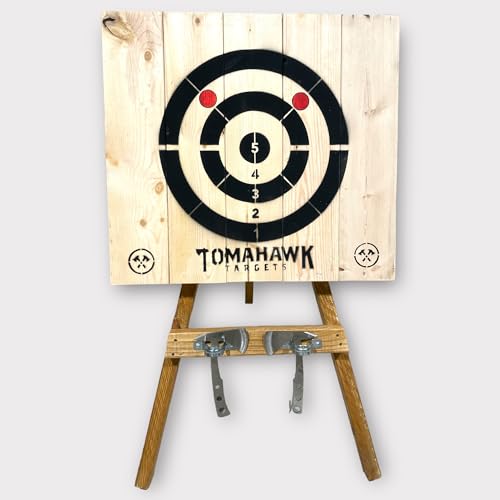

Freestanding tripod Axe Throwing