
You’re standing at the edge of the fairway, disc in hand, and freedom in your choice. But, do you know how that disc’s weight shapes your game?
Let’s dive into the numbers and mechanics that’ll give you the edge. As you hone your technique, understanding the subtle yet critical impact of disc weights becomes paramount.
Analyze the flight dynamics and tailor your selection with precision—because it’s not just about power; it’s about the freedom to outplay the course.
Understanding Disc Weights
You’ll often find that the weight of a disc significantly influences your throwing performance in disc sports.
Heavier discs afford more stability against environmental influences like wind, but they demand greater throwing strength. Conversely, lighter discs excel in calm conditions, offering easier acceleration and higher speed, which can translate to longer distances. Yet, they falter in turbulent weather, susceptible to veering off course.
Analyzing the trade-offs, consider disc durability. Heavier weights tend to withstand wear and tear better, maintaining their original flight characteristics longer. This aspect is crucial for consistent performance over time. Methodically choosing the right weight can liberate you from the constraints of unpredictable play, granting you the freedom to master your throws regardless of the external conditions.
Effects on Flight Dynamics
The weight of a disc you choose directly alters its flight dynamics, affecting stability, distance, and your ability to control its path.
Heavier discs tend to exhibit reduced lift efficiency, resulting in a quicker descent and potentially less glide. Conversely, lighter discs may enhance lift but are more susceptible to drag variation, which can cause unpredictable flight paths when faced with wind resistance or changes in throwing velocity.
By meticulously analyzing the disc’s weight, you can predict and influence its flight behavior. A heavier disc will generally penetrate the wind better, offering a more stable flight. However, the trade-off is a decrease in maximum distance.
Understanding these dynamics empowers you to select a disc weight that optimizes your throw, giving you the freedom to shape your game strategically.

FLIGHT RATINGS - Speed 3, Glide 2, Turn 0, Fade 1

Best choice for: New players, Water hazard shots and Tailwind drives

Best choice for: First Distance Driver and Tailwind Drives
Disc Selection for Beginners
Selecting your first set of discs is crucial in developing a reliable and enjoyable foundation in disc sports.
You’ll need to consider disc materials and how they respond to environmental factors. Analyze the data and make informed choices that grant you the freedom to excel in varied conditions.
| Disc Material | Emotional Response |
|---|---|
| Durable Plastic | Confidence in longevity |
| Soft Plastic | Comfort in grip and ease |
| Bright Colors | Joy in visibility |
| Heavy Weights | Satisfaction in wind resistance |
Disc materials like durable plastic ensure your discs withstand wear and tear, evoking confidence.
Soft plastics offer a comfortable grip, enhancing your enjoyment. Bright colors bring joy as they are easily spotted, and selecting heavier weights will satisfy your need for stability in windy conditions.
Methodically choose what best aligns with your play style and the freedom you seek on the course.
Advanced Weight Considerations
As you delve deeper into disc sports, understanding the nuanced impact of disc weight on your throw’s precision becomes imperative.
Given a disc’s material density, a heavier disc often provides stability and predictability against forceful winds. However, a lighter disc can offer superior distance and speed, crucial for calm conditions.
The analytical approach requires considering the quantitative aspects of both disc weight and weather adjustments. When assessing the optimal weight, factor in the material density of the disc in relation to the day’s weather patterns. A methodical evaluation of your personal throwing style coupled with these conditions allows you to determine the freedom to maneuver the disc effectively.
Tailoring Weight to Technique
Beyond assessing weather and material density, you’ll need to match the disc’s weight to your unique throwing technique for optimal control.
Weight customization isn’t just a preference; it’s a necessity for maximizing your performance. By adapting the weight of the disc to your technique, you ensure a synergy between your style and the disc’s behavior.
| Technique Adaptation | Weight Customization |
|---|---|
| Flick Wrist Speed | Lighter Discs |
| Arm Strength | Heavier Discs |
| Wind Penetration | Middle to Heavy Discs |
| Control and Precision | Tailored Weight Range |
Analyzing your throw’s speed, strength, and desired precision quantitatively informs the weight range you should consider. Freedom in your technique comes from this meticulous attention to detail, enabling you to choose a disc that feels like an extension of your will.

Lighter weights = More distance with less effort and Blizzard Champion offers Superior durability in light weight plastic

The Wraith is a versatile max-distance driver for players with moderate arm speed. It was a game changer when first introduced and has remained a staple in players’ bags for nearly 20 years.
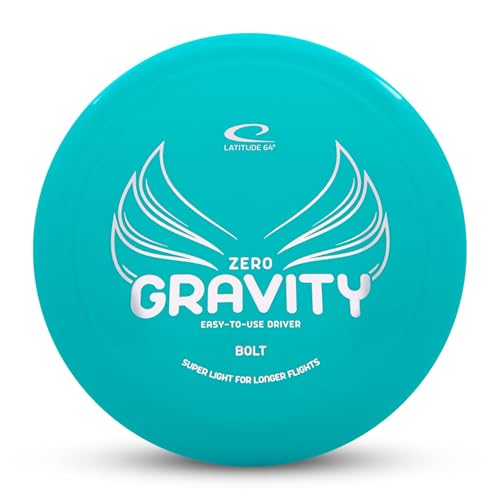
ABOUT THE BOLT – The Zero Gravity Bolt is a lightweight distance driver disc designed for beginners and players with slower arm speeds. Part of Latitude 64’s Easy to Use line, it weighs just 120-130g and features an understable flight and high glide, helping newer players achieve longer throws without needing maximum power