
You’re ready to elevate your disc golf game, and precision is key. You’ve grasped the basics; now it’s time to refine your technique.
This guide is your roadmap to mastering the art of the throw. From grip essentials to analyzing wind patterns, we’ll dissect each component.
You’ll learn to choose discs like a pro and execute throws with the finesse of an expert. Embrace the freedom of playing at your peak—let’s get technical and transform your game.
Grip Essentials for Pinpoint Control
You’ll find that a consistent and firm grip on the disc is crucial for achieving pinpoint accuracy in your throws.
Proper finger positioning is the foundation—each digit should be strategically placed to apply balanced pressure. For backhand throws, your fingers must curl tightly under the disc’s rim, with your thumb pressuring the top for a secure hold. In contrast, forehand throws demand a two-fingered grip, akin to a pistol, ensuring the disc is propelled with control.
Wrist control also plays a pivotal role. It’s not just about power; it’s about the wrist’s snap at the release point. Mastering this motion translates to a disc slicing through the air with precision.
Footwork and Stance for Fluid Throws
Adopt a balanced stance, ensuring your feet are shoulder-width apart to establish a solid foundation for your throw.
Precise footwork is crucial; it’s the bedrock of efficiency and power transfer in your throws. Analyze your movements to optimize balance techniques, guaranteeing that each step contributes to the momentum necessary for a controlled release.
Here’s a table to break down key components:
| Element | Purpose | Impact |
|---|---|---|
| Stance Width | Foundation for balance | Enhances power transfer |
| Lead Foot Angle | Directs force | Aids in aiming precision |
| Weight Shift | Drives momentum | Maximizes throw distance |
Master these elements to harness the freedom of movement and the power of physics, ensuring your disc soars with intention and lands with accuracy.

CORRECTS HAND POSITIONING ON EVERY SWING: Molded guide attaches to your club and places your fingers, thumbs, and palms in the correct neutral grip position; helps eliminate common faults like a strong grip, weak grip, or open right hand that lead to slicing and hooking


Training grip provides the correct hand position for the right golf grip
Choosing Discs for Peak Performance
Moving from stance and footwork to your disc selection strategy, it’s essential to choose discs that complement your throwing style and the course conditions you’ll face.
Disc stability is a fundamental aspect to consider; stable discs tend to hold a line, while overstable discs resist turning right (for a right-hand backhand throw), and understable discs do the opposite. This intrinsic characteristic dictates your disc’s flight path and responsiveness to torque and wind.
Factor in weather durability as well. A premium plastic disc withstands adverse weather and maintains its performance characteristics longer.
Analyze the course’s demands—long open fairways might call for maximum distance drivers, whereas wooded areas require precise mid-range discs.
Balancing stability with the right plastic ensures you’ve got the optimal arsenal to navigate any course with skillful freedom.
Refining Reach Back for Consistent Pull-Throughs
As you refine your reach back, it’s crucial to maintain optimal disc alignment to ensure accuracy and distance.
You must synchronize your body’s movements for a consistent pull-through, where timing is as critical as the positioning of the disc.
Analyze your form to pinpoint variances that could lead to errant throws, and strive for a repeatable motion that becomes second nature.
Optimal Disc Alignment
While you extend your arm during the reach back, ensure the disc remains level with the ground to maintain optimal disc alignment for a precise throw.
Disc alignment benefits are numerous: it increases accuracy, maximizes distance, and reduces the chance of off-axis torque, which can send your disc veering off course. Beware of alignment misconceptions; it’s not merely about grip or arm angle, but the coordination of the entire kinetic chain.
| Reach Back Phase | Focus Point | Benefit |
|---|---|---|
| Extension | Level Disc | Reduces Off-Axis Torque |
| Pull Through | Straight Line Path | Increases Accuracy |
| Release Point | Consistent Alignment | Maximizes Distance |
| Follow Through | Balanced Finish | Enhances Control |
| Recovery | Reset Posture | Prepares for Next Throw |
Mastering this aspect of your game grants you the freedom to command the course with unwavering confidence.
Consistent Pull-through Timing
Every precision throw in disc golf hinges on the consistency of your pull-through timing, directly following a level reach back.
To master this, you’ll need to integrate timing drills into your practice regimen. These drills refine the synchronization of your body movements, ensuring the disc is released at the optimal point for maximum accuracy and distance.
Focus on the fluidity of your arm’s motion, from the reach back to the release, and pay particular attention to the snap consistency at the end of your throw. This snap is the critical moment where power and precision converge.
By dedicating time to these aspects, you’ll develop a reliable technique that allows the freedom to execute shots under varying course conditions with confidence.
The Power of Follow-Through
You’ll notice your disc golf throws gain remarkable consistency when you prioritize a strong follow-through.
Dispelling follow-through myths requires understanding its mechanics; it’s not just an aesthetic flourish. It’s the culmination of your kinetic chain, ensuring energy is fully transferred to the disc. Skimping on follow-through can truncate your power and accuracy, leaving potential unfulfilled.
A solid follow-through hinges on mental focus—visualize the disc’s path even after release. This visualization promotes a complete range of motion, preventing premature deceleration. Your body’s momentum should carry forward naturally, reflecting the energy imparted to the disc. Remember, abrupt stops disrupt balance and precision.
Mastering follow-through liberates your play, allowing full expression of power and control in every shot.
Harnessing the Wind’s Potential
As you step onto the course, it’s crucial to assess the wind’s direction. A headwind or tailwind can drastically alter your disc’s flight.
You’ll need to evaluate the wind’s speed to adjust your throwing power and angle for optimal precision.
Selecting the right disc in response to these conditions is a strategic move that can make or break your game.
Wind Direction Assessment
To master your disc golf throws, it’s essential to assess the direction of the wind before each shot.
Reading the elements is a fundamental skill, letting you adapt your technique for precision. Crosswind throws, for example, demand a keen awareness of wind behavior to maintain control and accuracy.
Here’s a quick reference table to visualize wind direction impact:
| Wind Direction | Impact on Disc | Adjustment Strategy |
|---|---|---|
| Headwind | Increases lift | Use more stable disc |
| Tailwind | Decreases lift | Use less stable disc |
| Right-to-Left | Disc fades left | Aim right or anhyzer |
| Left-to-Right | Disc fades right | Aim left or hyzer |
| Variable | Unpredictable | Stay flexible, adjust on the fly |
Factor in these conditions, and you’ll be on your way to mastering the freedom of the flight path.
Speed Impact Evaluation
After gauging the wind direction, it’s time to evaluate how wind speed will affect your disc’s velocity and stability during flight. Understand that force dynamics play a pivotal role in the disc’s behavior.
A headwind amplifies speed and lift, demanding a more stable disc and a nuanced adjustment in release mechanics to maintain control. Conversely, a tailwind reduces perceived speed, necessitating a disc with less stability to achieve the desired distance.
Your release mechanics must account for these variances, ensuring that the angle and velocity of your throw counteract the wind’s influence. Analyze the wind’s speed meticulously, adapting your technique to harness its power rather than combat it.
This understanding grants you the freedom to execute throws that capitalize on the conditions, not just cope with them.
Strategic Disc Selection
While determining the best disc for your throw, you’ll need to consider how different wind conditions affect each disc’s flight characteristics. Analyze the environmental factors meticulously; headwinds and tailwinds can drastically alter your disc’s speed and stability.
In a headwind, opt for a more overstable disc, which resists turning over and fights against the wind, maintaining a predictable flight pattern.
Conversely, a tailwind allows for the use of a less stable disc, enhancing distance while reducing the risk of it fading too early.
Crosswinds demand a nuanced approach, requiring you to adjust your angle of release and potentially choose a disc with a thicker rim to combat the lateral push.
Your strategic disc selection in harmony with the wind’s caprices will unlock true precision in your game.
Angle Mastery for Shot Shaping Freedom
Mastering your disc golf throws, you’ll find that nailing the right release angle is crucial for achieving accuracy and distance on the course.
Understanding release mechanics and the nuances of Hyzer/Anhyzer angles will free you from the chains of inconsistency. Here’s a breakdown to guide your practice:
| Angle Type | Description |
|---|---|
| Hyzer | Disc tilts toward your body during release, promoting a stable, curving flight. |
| Anhyzer | Disc angles away from your body, encouraging an understable path with a rightward drift (for RHBH throwers). |
| Flat | Disc leaves your hand level, striving for a straight trajectory. |
| Variable | Adjusting between angles to navigate obstacles and wind conditions. |
Master these concepts, and you’ll command your discs with precision, shaping shots that defy obstacles and maximize your freedom on the fairway.
Can Beginners Use the Discs Recommended in “Unlock the Freedom” to Master Disc Golf?
Yes, beginners can use the disc golf discs for beginners recommended in “Unlock the Freedom” to master disc golf. These discs are designed to help new players improve their skills and feel more confident on the course. With the right equipment, beginners can quickly progress and enjoy the game even more.
Cultivating Consistency Through Practice
To translate your understanding of release angles into consistent throws, you’ll need to engage in targeted practice drills. These drills are designed to refine your throwing mechanics, a blend of physical repetition and mental focus that forges the path to precision.
Start with a structured fieldwork routine, throwing multiple discs at a specific target from varying distances, focusing on maintaining a consistent form. Analyze each throw’s flight path, adjusting your grip, stance, and release as necessary.
Mental focus is critical; visualize your line before each throw and execute with intention. Incorporate a balance of standstill shots and run-ups to challenge your adaptability.
These repeated, deliberate practices will build muscle memory, ensuring that freedom in your game comes from a foundation of disciplined consistency.

SIZE 8-14 - Fits men's sizes 8-14 US

【GOLF ACCESSORY FOR IMPROVED TECHNIQUE】DOES NOT INCLUDE TEE CLAWS. Use our alignment aid lanyards instead of outdated alignment sticks to improve your alignment, ball position, swing path, target line, putting, chipping, pitching, fielding and so much more. A versatile training aid that will help improve your technique
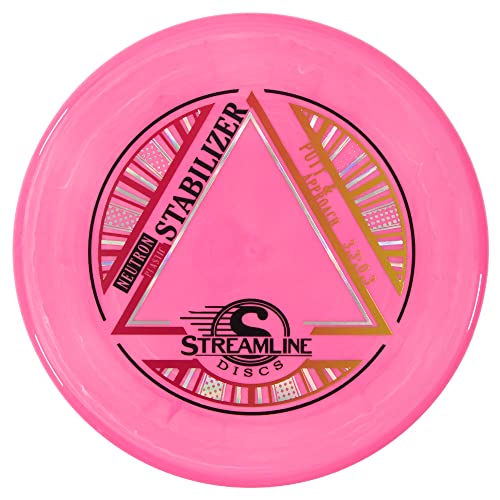
STREAMLINE STABILIZER - The Pilot is designed to be a go-to putter off the tee or on the approach! The Stabilizer has a similar hand feel and depth as the Neutron Pilot, but with a slightly raised shoulder and more pointed nose that produces a flatter and more stable putter.