
You might not realize it, but mastering the disc golf backhand isn’t just about skill—it’s about protecting your freedom on the course. When you’re throwing, your elbow’s at risk, especially if you’re not paying attention to form.
You’re after that perfect arc, but without proper technique, you could sideline yourself with an injury that keeps you from the game you love. It’s essential to get your mechanics right; a smooth motion and a controlled follow-through can save you from pain.
By incorporating strength exercises and a thorough warm-up, you’ll keep your arm healthy. And if you do feel a twinge, don’t push through. Give yourself the liberty to rest and recover, so you can keep playing disc golf on your terms.
Understanding Backhand Mechanics to Prevent Injury
Why should you pay attention to the mechanics of your backhand throw in disc golf?
The answer lies in the freedom you seek from the sport, unburdened by the constraints of disc golf injuries.
A well-executed backhand throw minimizes the stress on your throwing arm, particularly the elbow and shoulder joints.
It’s crucial to understand that poor technique can lead to overuse of your arm muscles, causing pain and swelling that limit your range of motion.
By focusing on the correct mechanics, you’re not only improving your game but also protecting your rotator cuff from strain.
Recognizing and Preventing Common Disc Golf Injuries
As you continue to enjoy disc golf, it’s vital to recognize the symptoms that signal potential injuries. Common issues include elbow tendinitis, rotator cuff strains, and lower back pain, which are often the result of repetitive throwing motions.
To prevent these frequent injury types, pay close attention to any discomfort or changes in your body’s response during and after play.

TARGETED COMPRESSION: Our Tennis Elbow Support Strap with Gel Pad delivers both compression to alleviate pain and discomfort, and cushioning with an integrated gel pad. Perfect for activities that exert pressure on the forearm and elbow
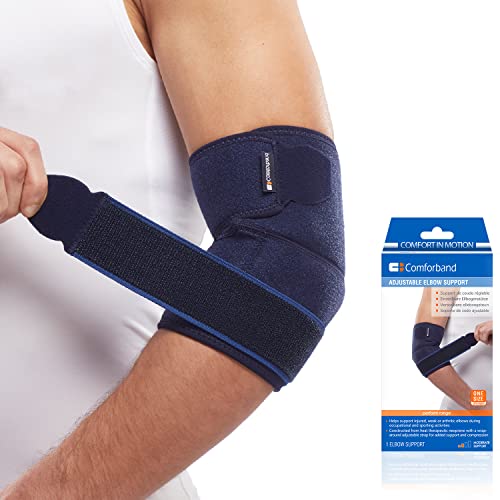
✅ 【PREMIUM STABILIZING SUPPORT】Supporting the elbow joint and tendons, the Comforband elbow brace provides customizable compression and stabilization to reduce pain, swelling and inflammation. Effectively relieves pain due to tennis elbow, tendonitis, bursitis, strains or other injuries without limiting the range of motion in the elbow for optimal support throughout the day.
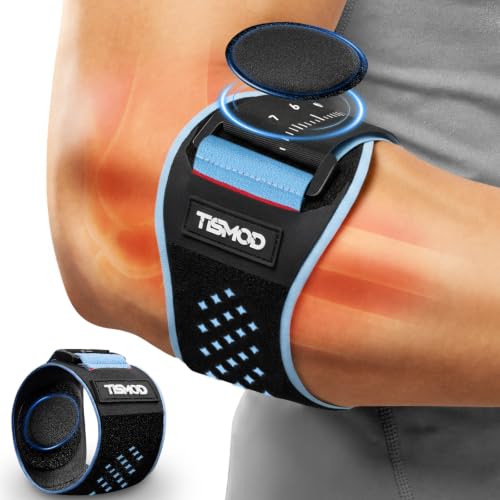
【Upgraded Dual Gel Pad Design】This tennis elbow brace is features upgraded dual gel pads that deliver focused compression and enhanced support for a secure, comfortable fit. Compared with standard single-pad designs, it offers added stability for daily activities and exercise.
Injury Symptoms
Recognizing the symptoms of a disc golf backhand injury is crucial for timely intervention and treatment.
If you’re experiencing shoulder injury, such as a sharp pain in your upper arm or difficulty moving your arm through a normal range of motion, these could be injury symptoms indicating a problem with your rotator cuff or labrum.
Elbow pain might suggest tendinitis, especially if it worsens with activity. Swelling, inflammation, and weakness in the arm, coupled with trouble gripping discs, signal that you should seek medical advice.
Preventing these injuries involves proper warm-up, technique, and strength training. Remember, addressing symptoms early can preserve your freedom to play without the constraints of chronic pain.
Frequent Injury Types
In your quest to master the disc golf backhand, it’s essential to be aware of common injury types such as golfer’s elbow, shoulder impingement, and herniated discs that can result from poor form and overuse.
As disc golfers, recognizing these injuries early on is crucial for maintaining your freedom on the course. Golfer’s elbow, or medial epicondylitis, arises from repetitive forearm stress, leading to pain and tenderness. Shoulder impingement occurs when overhead motions inflame shoulder tendons. Herniated discs in the lower back can be due to sudden twists or poor body mechanics.
Seeking guidance from Sports Medicine professionals and adhering to Physical Therapy principles can prevent these ailments. Remember, prevention is key to ensuring that you stay injury-free and continue enjoying disc golf.
Importance of Warm-Up and Technique in Injury Prevention
Proper warm-up routines are crucial for you to minimize the risk of arm injuries while perfecting your disc golf backhand. Before you start playing disc, dedicating time to a comprehensive warm-up can significantly decrease your chances of sustaining an injury in disc golf, particularly in your shoulder.
Begin with dynamic stretches that enhance flexibility and boost blood flow to the muscles you’ll heavily rely on. Gradually escalate the intensity of your throws, ensuring your muscles are primed for the activity ahead.
This preventative measure not only safeguards your arm against undue stress but also optimizes your performance. Remember, a disciplined approach to warming up is a testament to your commitment to the sport and your personal health.
Mastering Grip and Stance
You’ll significantly reduce your risk of elbow injuries in disc golf by mastering the correct grip and stance. Precise technique is your ticket to freedom on the course, preventing the dreaded elbow hyperextension that can occur when you swing your arm with improper form.
Grip the disc firmly but not too tightly, and align your stance to ensure a balanced and controlled throw. Initiating the throw from the center of your chest, with a focus on shoulder rotation rather than just arm movement, can help in avoiding off-axis torque that often leads to injury.
Executing the Backhand Throw
Every time you execute a disc golf backhand throw, it’s crucial to maintain a fluid motion that minimizes stress on your elbow.
To prevent injuries, don’t rely too much on arm strength; instead, engage your whole body. Focus on a controlled follow-through and ensure you’re rotating your shoulders properly.
This not only enhances your throw but also safeguards your elbow from the strain that can lead to hyperextension.
| Technique Element | How It Helps | What To Avoid |
|---|---|---|
| Controlled Extension | Reduces hyperextension risk | Full Elbow Lock-Out |
| Shoulder Rotation | Distributes force evenly | Over-reliance on Arm |
| Powerful Finish | Maintains stability and direction | Abrupt Stops |
| Push from Chest | Lowers off-axis torque | Excessive Wrist Action |
Adopt these strategies to keep your game consistent and your elbow injury-free, enjoying the freedom of play that comes with good health.
Injury Prevention Strategies
To stave off disc golf backhand injuries, it’s crucial that you hone your throwing technique; a well-executed backhand reduces strain on your arm and body.
Incorporating strength training into your routine bolsters muscle stability and endurance, further safeguarding against injury.
Always seek expert advice to tailor these strategies to your individual needs and ensure you’re practicing the safest form possible.
Executing the Backhand Throw to Avoid Hyperextension
While mastering your disc golf backhand, it’s crucial that you don’t fully extend your elbow to dodge muscle overuse injuries that can irritate the ulnar nerve.
Employing proper throwing techniques is essential not only for performance but also for injury prevention. Disc golf backhand injuries are usually the result of improper form, which can lead to a host of issues, including knee injuries.
| Focus Area | Technique Element | Benefit |
|---|---|---|
| Elbow Extension | Avoid Full Extension | Protects Ulnar Nerve |
| Follow-Through | Controlled & Smooth | Reduces Elbow Hyperextension Risk |
| Shoulder Rotation | Proper Mechanics | Increases Range of Motion |
Adhering to these pointers enhances your freedom on the course, ensuring you play without the shackles of preventable injuries.
Incorporating Strength Training to Bolster Injury Defense
Incorporating arm muscle conditioning into your routine can bolster your defense against common disc golf backhand injuries. Strength training benefits you by fortifying the muscles used in your swing, particularly those in your shoulder blade area, core, hamstrings, hips, and glutes.
If you’ve never really engaged in focused strength training, now’s the time to start. It’s not just about power—it’s about stability and control. For first-time strength trainers, the freedom from injury is a game-changer.
By targeting the gluteus maximus and controlling hip movement, you’ll not only enhance performance but also minimize hip flexor strain and prevent knee pain.
Embracing the Post-Injury Recovery Process for Long-Term Health
Your recovery’s success from a disc golf backhand injury hinges on diligently following your physical therapist’s recovery plan.
As an Ace Member of the disc golf community, you’re eager to play one more round, but it’s crucial to embrace the post-injury recovery process fully. This is not just about healing; it’s about preventing future injuries, ensuring you can enjoy the freedom of the game for years to come.
Here’s a focused recovery timeline:
| Phase | Focus |
|---|---|
| Initial | Pain management, gentle motion |
| Mid-Recovery | Strength building, flexibility |
| Late Recovery | Sport-specific drills, gradual return to play |
Stick to the plan, stay patient, and you’ll be back on the course, swinging for that ace with confidence and a body that’s stronger than before.

FLIGHT RATINGS - Speed 3, Glide 2, Turn 0, Fade 1

Sturdy, patented frame doubles as a portable seat rated to safely support up to 300 lbs

SPACIOUS AND LIGHTWEIGHT: The Dynamic Discs Trooper Backpack for disc golf is designed to hold 18+ discs, providing a lightweight and practical solution for disc golfers. Its spacious design allows players to carry all their disc golf equipment without feeling weighed down, ideal for beginners & experienced players alike.