
Just as the mythical phoenix rises from its ashes, you too can have a rebirth on the disc golf course with what’s known as a mulligan.
In the spirit of second chances and liberation from a less-than-ideal throw, a mulligan grants you the freedom to retake a shot without penalty to your score. It’s your secret weapon in friendly matches, letting you shake off a bad toss and keep the game moving in your favor.
You’re not bound by the constraints of traditional scorekeeping, but remember, this luxury isn’t part of the official rulebook. In tournament play, every throw counts, so save the mulligans for casual rounds where the wind whispers of freedom and the joy of the game trumps the competition.
Defining the Mulligan
Regarding a mulligan in disc golf, you’re essentially granted a second chance to throw your disc, without penalty to your overall score.
It’s a strategic tool that empowers you to erase a suboptimal shot, replacing it with a fresh attempt to navigate closer to the basket. While the concept is straightforward, applying it effectively demands a keen understanding of your capabilities and the course’s challenges.
Employing a mulligan isn’t about whimsically redoing every throw; it’s about judiciously selecting that critical moment when a do-over can pivot the game in your favor. Remember, the objective is to minimize mulligan usage while maximizing your score – a balance that tests your decision-making and technical skills.
Use this liberty wisely to outmaneuver the course and outperform the competition.
Origin of the Mulligan
You’ll find that the term ‘mulligan’ has been borrowed from traditional golf, where its usage has a rich historical background. The name itself holds etymological significance, stemming from a possibly apocryphal tale involving a golfer named David Mulligan.
Understanding its transformation into disc golf terminology requires an examination of the game’s rule evolution and the Rules Committee’s standardization efforts.


Golfing Term Adaptation
As you delve into the history of the mulligan, you’ll uncover that this term was lifted directly from traditional golf, where it originally allowed golfers a second chance to perform a shot without penalty. This golfing term adaptation acknowledges the imperfections inherent in any sport requiring precision and skill.
In disc golf, the concept of the mulligan has been seamlessly integrated, offering you the opportunity to rectify a subpar throw.
When engaging in a mulligan challenge, your objective is to strategically deploy this privilege to optimize your score across the course. You must weigh the decision to use a mulligan against the potential to conserve it for future holes, adding a tactical layer to your game.
Thus, the mulligan embodies both a nod to tradition and an adaptation for modern play.
Historical Roots
You may find it intriguing that the term ‘mulligan’ traces its roots back to a golfer named David Mulligan, who in the 1930s took a second shot during a friendly game in Canada, hence giving birth to this do-over practice.
As disc golf evolved, Steady Ed Headrick, the father of modern disc golf, recognized the mulligan’s potential for adding a layer of strategy and leniency to the sport.
| Year | Event | Impact |
|---|---|---|
| 1930s | David Mulligan’s second shot | Original mulligan in golf |
| 1960s | Steady Ed Headrick’s influence | Disc golf formalization |
| Modern Era | Mulligan adoption in disc golf | Added fun and strategic element |
| Tournaments | Rule integration | Defined use and limitations |
| Casual Play | Mulligan usage | Encourages freedom and enjoyment |
Embrace the mulligan, and you’ll not only honor disc golf’s heritage but also harness a tactical advantage on the course.
Name’s Etymology
Understanding the term’s etymology, your disc golf mulligan’s roots can be traced back to a golfer’s fortunate second chance.
This concept, born on the fairways, has seamlessly transitioned to the disc golf course, granting you the freedom to rectify a subpar throw, especially when you’ve missed a mando.
The term’s adoption in disc golf reflects the sport’s laid-back ethos, allowing for a forgiving approach to a game that values inclusion and enjoyment. As you harness this provision, employ it judiciously; a mulligan isn’t merely about erasing errors—it’s a strategic tool that can redeem a round gone awry.
Use it to understand wind patterns, refine your technique, or simply to keep spirits high after an off-mark drive.
How Mulligans Work
In disc golf, if you’re unsatisfied with your initial throw, you can opt for a mulligan, allowing you to take another shot from the same spot.
This do-over is particularly handy when your disc lands in an unfavorable location or you simply botch the execution. However, it’s vital to understand that mulligans aren’t unlimited; their use is often predetermined by the rules of the tournament or casual play agreement.
Executing a mulligan requires precision. You must replicate the conditions of your first throw—same stance, same starting point. When challenging yourself with a mulligan challenge, you aim to minimize their use while still achieving or exceeding the target score.
This hones your skills and encourages strategic play, as each mulligan becomes a calculated decision towards improving your performance on the course.
Mulligans in Tournaments
As you prepare for tournament play in disc golf, you’ll notice that mulligan rules can vary depending on the event’s specific regulations, which are transitioning from the rule book to the Competition Manual.
Your strategic approach to using mulligans during a tournament must account for these variations, as well as the potential impact on your overall score and standing.
It’s crucial to stay informed about the latest Rules Committee updates, which can refine mulligan usage and influence your competitive tactics.
Tournament Rules Variance
Tournament rules variance allows you to use a mulligan in disc golf competitions under certain conditions, though it’s not a standard practice.
As an expert disc golfer, you know that the Professional Disc Golf Association (PDGA) sets the standard for tournament play, but local tournament directors might implement a rules variance to include mulligans, often for charity events or casual competitions.
When mulligans are permitted, it’s vital to understand the specific parameters – how many you’re allotted, in what circumstances they can be used, and any impact on your official score.
To harness this freedom effectively, stay sharp on updates to the PDGA Competition Manual, which delineates tournament rules separate from the general game rules, ensuring your play aligns seamlessly with the current standards.
Player Strategy Impact
Your strategy’s effectiveness in disc golf tournaments can be significantly influenced by the rare opportunity to use a mulligan.
Since the introduction of the foot fault rule in 1990, you’ve lost the leniency of a free do-over, prompting a more calculated approach to each throw.
The evolving rules landscape, beginning in 1982, has steadily shaped how you integrate mulligans into your game plan. You must now navigate compound penalties and mandatory obstacles (mandos) with precision, minimizing the need for mulligans that can compound your score due to errors.
As the rule book continues to refine its language, expect further player strategy impact, demanding a higher level of foresight and adaptability in your tournament play.
Etiquette Surrounding Mulligans
Respect the game and fellow players by clearly communicating and agreeing on the use of mulligans before teeing off.
The etiquette surrounding mulligans demands a clear consensus to maintain the spirit of fair play and enjoyment for everyone. Here’s a concise table to guide your understanding:
| Consideration | Action |
|---|---|
| Transparency | Discuss mulligan use openly with your group. |
| Agreement | Ensure unanimous agreement on mulligan rules. |
| Courtesy | Limit mulligans to avoid game delays. |
When playing, it’s crucial to not overuse this privilege. Excessive mulligans can lead to delays and frustration, impinging on the freedom of play that you and others cherish. Stick to the pre-agreed rules and remember that mulligans are a courtesy, not a right.
Limitations and Penalties
While mulligans offer a second chance on the course, they’re not without restrictions and can carry penalties if misused. Understand that limitations and penalties exist to preserve the integrity of disc golf.
For instance, if you take a mulligan when not allowed, you could face strokes added to your score. Historically, disc golf has seen harsh penalties for various infractions, but the focus has shifted towards ensuring fairness without excessive punishment.
Your freedom to use a mulligan is typically dictated by the rules of the tournament. Always check the event guidelines to avoid the consequences of an illegal play. Remember, playing from the wrong lie once incurred a two-throw penalty, and such stringent rules are designed to deter careless play.
Stay sharp on the regulations to play confidently and penalty-free.

A Stable Approach Putter for Throwing at the Basket or for Maneuvering Across Tight Fairways

COMPLETE SET: This complete disc golf set from Franklin Sports is the perfect yard game for a family picnic, barbecue, or other get-together
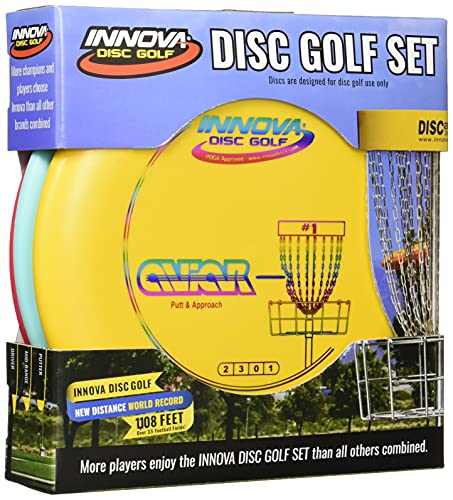
Complete Set: Includes One Driver, One Mid-Range And One Putter