
You’re standing on the green, eyeing the basket. It’s time to master the putt, the most critical shot in disc golf.
You’ll need more than luck; understanding the rules and strategies is crucial. We’ve distilled the guidelines and pro tips to transform your game.
Dive into the details of stance, markers, and the 10-meter rule. You’re in control—let’s sharpen your skills and claim the freedom to outplay the course.
Ready to perfect your putt? Let’s begin.
Understanding the Putting Area
In disc golf, you’ll find that the putting area, also known as the 10-meter circle, is crucial to master since it’s where strokes are often won or lost.
Your putting mechanics must be precise, adapting to the varying green conditions you’ll encounter. Firm footing and a confident stance are the foundations of a stable putting technique.
You need to consider the lay of the land; is the green sloped, is the wind a factor, are there obstacles that affect your line of sight? Each of these elements requires a strategic adjustment to your putting style.
Remember, within this circle, a step putt isn’t allowed; you must release the disc before any supporting point contacts the ground beyond your lie.
Mastering these nuances gives you the freedom to clinch those crucial shots.
Establishing Your Stance
Having considered the landscape and rules within the putting area, you’ll now focus on perfecting your stance to optimize balance and accuracy for your putts.
Stance alignment is paramount; it’s the foundation of your putting technique. To ensure you’re setting up correctly, your feet should be shoulder-width apart, providing a stable base. This position allows for a smooth, pendulum-like motion essential for consistency.
Master balance techniques by grounding yourself, feeling the earth beneath your feet, and distributing your weight evenly. A slight bend in the knees aids in agility and power control. Keep your head still and eyes fixed on the target throughout the motion.
Precision in these fundamentals liberates your game, allowing for a fluid, confident putt.

The Aviar is a straight-flying Putt and Approach with a predictable finish. It is the most popular Putter of all time and has been used to win more World Championship titles than any other Putter.

FLIGHT RATINGS - Speed 3, Glide 2, Turn 0, Fade 1

REALISTIC PUTTING EXPERIENCE – True-roll mat surface replicates the putting speeds and conditions found on actual golf courses, allowing you to fine-tune your putting skills with a consistent and predictable roll
Marker Disc Regulations
After nailing down your stance, you’ll also need to understand the specific regulations surrounding the use of a marker disc in putting scenarios. The Professional Disc Golf Association (PDGA) mandates that your marker disc must adhere to certain standards to ensure fair play. Disc color plays a pivotal role for visibility. In adverse weather, the choice of a high-contrast disc can be crucial. Weather impacts like wind can shift your marker; always reposition it if necessary, adhering to regulations.
| Regulation | Details |
|---|---|
| Size | Must not exceed 15cm in diameter |
| Thickness | Should not be greater than 3cm |
| Position | Directly in front of the thrown disc |
| Identification | Must be uniquely identifiable |
| Usage | Only one marker disc used at a time |
Analyzing these guidelines, it’s clear that precision in marking your lie is just as critical as the putt itself.
The 10-Meter Rule Explained
You’ll need to grasp the significance of the 10-meter rule, which dictates that certain putting restrictions apply within a circle extending 10 meters from the basket. This rule is paramount to maintaining the integrity of your putting game.
Within this radius, known as the circle’s edge, you must release your putt before any part of your body touches the ground beyond your lie. This notably impacts jump putts, a technique where players may propel themselves forward as they release the disc.
Beyond the 10-meter mark, jump putts are permissible, but within it, they’re strictly regulated. Violations can lead to penalty strokes, underscoring the need for precision and control.
Mastering the nuances of this rule is essential for securing your freedom to score without needless penalties.
Putting Etiquette and Courtesy
As you step onto the putting green, it’s crucial to adhere to the silent stance observance, ensuring your movements and noise don’t distract others.
You must also respect turn-taking protocols, which dictate that the player furthest from the basket putts first, maintaining the flow of the game.
These rules aren’t just about fairness; they’re designed to preserve the integrity and spirit of disc golf.
Silent Stance Observance
One must always maintain silence and stillness when someone is executing their putt to uphold the game’s etiquette and ensure fair play.
This isn’t merely about politeness; it’s an essential aspect that affects a player’s faultless footing and mental focus.
Any unnecessary noise or movement can disrupt concentration and stability, leading to a compromised shot.
As a player, you know the liberty of playing without external disturbances is critical to your performance.
Respecting this silent stance observance is part of your unwritten contract with fellow players, demonstrating an understanding of the game’s deeper intricacies.
Respectful Turn Taking
In every round of disc golf, each player’s turn at putting is a fundamental element of the game’s courtesy and flow. You must recognize that maintaining a consistent putting rhythm is crucial, not just for your game but for your fellow players as well.
Interruptions can be detrimental to focus techniques critical to successful putting. Hence, it’s essential to wait patiently and silently for your turn, allowing the player before you to complete their putt without distractions.
This respect for turn-taking underpins the spirit of the game, ensuring all players experience the freedom to concentrate and execute their putts. Adherence to this etiquette not only demonstrates sportsmanship but also preserves the integrity and pace of play.
Obstacle and Relief Procedures
You’ll encounter various obstacles on the course that can impede your putting line, and it’s crucial to understand the rules that govern how to navigate them.
The PDGA’s relief rule allows you to mark a lie behind the point of obstruction, maintaining the line of play, when certain conditions are met. This procedure ensures fairness and consistency in play, especially when dealing with mandatory obstacles that dictate your throwing path.
Mandatory Obstacle Navigation
While mastering your putting technique, it’s essential to understand how to adeptly navigate mandatory obstacles and relief procedures on the disc golf course. Disc selection becomes pivotal when confronting such challenges.
Choose a putter that responds reliably under the specific wind conditions you’re facing. Wind consideration isn’t a mere suggestion—it’s a strategic imperative that can make or break your shot. Analyze the wind’s direction and strength.
A headwind might demand a more stable disc to resist turning over, while a tailwind could allow for a less stable option, providing a straighter finish.
Your freedom to execute the perfect putt hinges on your ability to assess, decide, and execute with precision, ensuring that mandatory obstacles don’t dictate your game, but rather, you master them.
Relief Rule Application
How do you apply relief rules when your disc lands in an unplayable lie or near an obstacle, ensuring your next putt adheres to the official guidelines?
Analyzing the situation is key. If a faulty release lands you in a predicament, you’re entitled to a relief that doesn’t compromise fairness or advantage. Without penalty, move the disc to the nearest lie, maintaining the line of play.
This is pivotal to avoid interference while respecting the course’s integrity. Incorporate wind consideration; it’s vital to assess how the elements might influence your relocated stance and subsequent putt.
Methodically applying these relief procedures ensures your play remains within the spirit of the game, granting the freedom to execute a strategic and rule-compliant putt.
Advanced Putting Strategies
Adopting three key strategies can elevate your disc golf putting game, ensuring you’re not just playing by the rules but also optimizing each putt for success.
First, mastering spin control is crucial; a consistent spin stabilizes the disc’s flight, reducing the influence of external variables. Precision in applying spin will grant you the freedom to aim with confidence, regardless of distance.
Secondly, wind consideration is indispensable. Analyze the wind’s direction and speed meticulously; adjust your stance and throwing technique to counteract its effects. The ability to read and react to the wind’s capricious nature allows for a liberated approach to each shot.
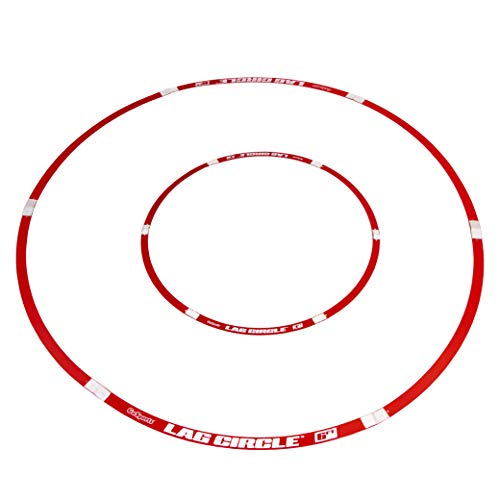
2 PIECE SET: 6 ft. circle for chipping and 3 ft. circle for putting; both circles can also be separated to form semi-circles

Built for Putting: The 3 ft target ring helps golfers practice lag putting with a clear scoring zone, improving pace, distance control, and accuracy while training smarter habits that help reduce costly 3-putts.

Reliable Material: the golf target circles' waterproof nature, courtesy of the PVC leather material, ensures that unfavorable weather or spillages don't impede your practice; Additionally, they're soft, foldable, and easy to store and carry, promoting portability and ensuring your practice session can happen anywhere, anytime