
Imagine the satisfying sound of chains as your putter makes its final approach, but how far should it have flown to get there? When you’re sizing up the basket, remember that your putter’s ideal range typically spans from 50 to 100 meters; it’s the tool for accuracy over distance.
It’s your skill and style that dictates the final distance, though. You’re not just hurling a piece of plastic; you’re executing a dance of spin, speed, and finesse. If you’ve got the touch, you might push that boundary further but don’t sweat the numbers.
Focus on your form, the disc’s behavior, and the joy of the game. Your freedom on the course comes from playing your own way, and the disc will go as far as you can skillfully coax it.
Understanding Putter Distances
Grasping the concept of putter distances is crucial as you hone your disc golf skills and strategize your play. To master the art, you must understand that aiming to throw putters right up to the 100-meter mark isn’t just ambitious but possible with the right technique.
Surprisingly, employing slightly less power can enhance your distance, as it allows for better control and a smoother release. Ideal conditions are key; calm days without wind empower you to reach peak performance.
Moreover, familiarizing yourself with the flight characteristics of your putters ensures that you can adapt to headwinds effectively. This knowledge isn’t just about power—it’s about the freedom to navigate the course with precision and confidence.
Ideal Putter Range: Finding the Sweet Spot
How do you determine the ideal range for your disc golf putter to ensure precision and control on the course?
As an experienced disc golfer, you seek the liberty to play disc golf with mastery over your gear. Your putter, unlike distance drivers, isn’t designed to soar vast lengths. Instead, it’s the tool for finessing flight paths, carving the air with intent and strategy.
Newer players often mistake power for proficiency, launching putters beyond their optimal range of 20-100 meters, sacrificing accuracy. Mastery lies in harnessing control, not excess.
Aim for a range where you can predict the disc’s behavior—typically under 100 meters on a serene day. Find your putter’s sweet spot; that’s where true freedom on the fairway begins.

Dynamic Discs Judge Disc Golf Putter was named the 2013 Disc of the Year in the Player's Choice Awards for its incredibly predictable flight and its relentless pursuit of disc golf basket chains
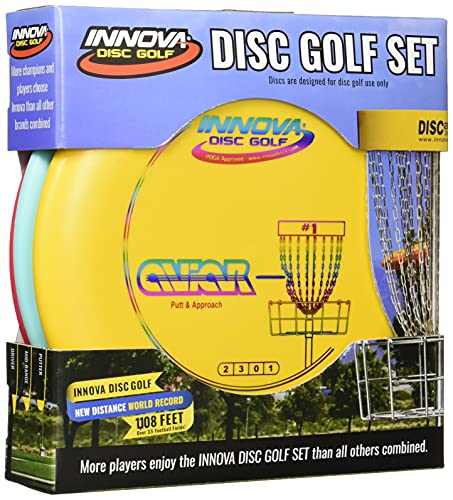
Complete Set: Includes One Driver, One Mid-Range And One Putter

Factors Influencing Distance: Understanding the Variables
Your putter’s distance is influenced by several factors, including stability, flight numbers, wind conditions, and throwing technique.
A stable putter with balanced flight numbers will typically yield consistent distances, while an understable disc might turn over too quickly, reducing its forward progression. The flight plate’s design also affects air resistance and lift, crucial to achieving optimal distance. Mastery of your throwing technique, with a focus on power and form, is paramount.
Wind conditions can either aid your throw or challenge it, and you must adapt to these variables for maximum distance. Here’s a breakdown of the factors:
| Factor | Influence on Distance |
|---|---|
| Stability | Consistency |
| Flight Numbers | Potential Distance |
| Wind Conditions | Variable Impact |
| Throwing Technique | Control and Power |
| Flight Plate Design | Lift and Air Resistance |
Technique for Maximum Distance
To unlock your putter’s full potential, you’ll need to refine your grip and optimize power transfer.
Your grip style isn’t just about comfort; it’s crucial for controlling the putter and channeling maximum energy into your throw.
Mastering the kinetic chain from your back foot through to the clean release of the disc ensures that every ounce of power translates into distance.
Grip Styles: Choosing Control vs Power
Experimenting with different grip styles, such as the power grip or fan grip, can significantly boost the distance you achieve with a disc golf putter.
Your choice should hinge on comfort and the ability to maintain a firm hold while ensuring a smooth release. The power grip engages more muscle groups, offering increased torque, whereas the fan grip provides superior control.
To clarify, here’s a breakdown:
| Grip Style | Muscle Engagement | Release Control |
|---|---|---|
| Power Grip | High | Moderate |
| Fan Grip | Moderate | High |
| Modified Fan | Adjustable | Customizable |
Selecting the grip that suits your hand size and strength is pivotal. Remember, freedom in your technique translates to freedom in your game—choose a grip that liberates your potential.
Power Transfer Efficiency: Channeling Energy Through Technique
Achieving the optimal distance with your disc golf putter hinges on mastering a technique that efficiently transfers power from your body to the disc. Power transfer efficiency isn’t just about brute strength; it’s about the finesse of coordinating your entire body to work in unison.
Engage your hips and shoulders, harnessing the kinetic chain to channel energy to the disc. A smooth release, precise timing, and a calculated weight shift are the cornerstones of propelling your putter with maximum velocity.
Your grip and wrist snap aren’t mere details but critical elements that refine power transfer. Understand your putter’s flight characteristics and stability to tweak your technique, ensuring every ounce of effort is converted into distance.
Embrace these principles, and you’ll command the flight of your disc with unyielding precision.
Putter Selection and Distance
When you select a putter, consider how its weight affects the throw; heavier discs provide stability but may reduce range.
The material of your putter also plays a critical role, influencing both durability and flight characteristics, which can alter how far the disc travels.
Putter Weight Impact
You’ll notice that your disc golf putter’s weight significantly influences the distance you can achieve on the course. The putter weight impact is a fundamental aspect of your selection strategy, affecting both power requirements and stability.
Opt for heavier putters when you’re seeking to capitalize on momentum for longer throws. Their increased mass allows them to cut through the wind and maintain a steadier flight path.
Conversely, in scenarios demanding finesse over brute distance, lighter putters afford you superior control. They require less force, enabling precise short-range shots. Be mindful, though, that lighter putters can falter in windy conditions, as they’re more susceptible to being buffeted off course.
Mastering the balance between putter weight and your throwing strength is essential for achieving both consistency and optimal distance.
Material Selection: Optimizing Flight Characteristics
As you select your disc golf putter, consider how the material affects its range and your potential distance on the course.
Different plastics or rubber blends can drastically influence how discs fly, with each composition offering unique flight characteristics. Some materials provide enhanced glide and stability, enabling longer flights. Conversely, other compounds may offer superior grip and durability, which can affect the velocity and trajectory of your throws.
The putter’s weight and feel, dictated by its material, directly impact the required technique and power for achieving desired distances. Additionally, material choice plays a pivotal role in throw consistency and control, particularly in variable wind conditions.
Selecting the optimal material for your putter is essential for maximizing your range and mastering the course.
Shape and Aerodynamics: Design Elements That Add Distance
In addition to material, the shape of your putter plays a crucial role in determining how far it’ll travel through the air. The intricacies of its design, from the beveled edges to the depth of the rim, directly impact its aerodynamic properties.
A flat-topped putter, like the Link, tends to have a more consistent glide, ideal for cutting through headwinds and maintaining distance. Conversely, a putter with a more pronounced dome, such as the Ace, can leverage the air beneath it for added lift, potentially extending its flight under calm conditions.
Mastering shape influences flight, and understanding these nuances ensures you select a putter tailored to your style, maximizing distance within the bounds of the course and the whims of Mother Nature.
Common Mistakes: Avoiding the Pitfalls
Don’t overlook the subtle nuances of your grip and stance, as these can greatly affect your putter’s trajectory and distance.
A flawed throwing motion not only hampers accuracy but also limits how far your putter will travel. It’s not simply about power; it’s about finesse and understanding the wind conditions that play into your putter’s flight characteristics.
| Mistake | Impact on Throw | Correction Strategy |
|---|---|---|
| Overpowering the throw | Reduced control | Use moderated power for better accuracy |
| Ignoring wind conditions | Unpredictable flight | Adapt your technique to current conditions |
| Inconsistent warm-up | Variability in performance | Establish a routine for all disc types |
| Poor grip and stance | Inefficient motion | Refine these fundamentals for optimal results |
Embrace these insights to unlock a throwing motion that’s liberated from common errors, leading to impressive, consistent putter throws.
Elevating Your Putt: Steps to Consistent Excellence
Before diving into practice, it’s crucial you understand that refining your putter throw involves more than just sheer force; it requires a blend of technique, consistency, and the right equipment.
To start improving your putter throw, adopt a grip and stance that afford you control and balance. A smooth, controlled release is paramount; it can significantly boost your putter’s distance.
Prioritize a consistent and deliberate motion—repetition is the bedrock of mastery. Don’t hesitate to experiment with various putter molds until you discover one that resonates with your style and amplifies your distance.
Lastly, dedicated practice hones your techniques, bolstering confidence and precision. This strategic approach will undeniably elevate your putter throw prowess.

STREAMLINE PILOT - The Pilot has a medium-depth grip, small-bead wing design, flat top, and a comfortable rounded nose.
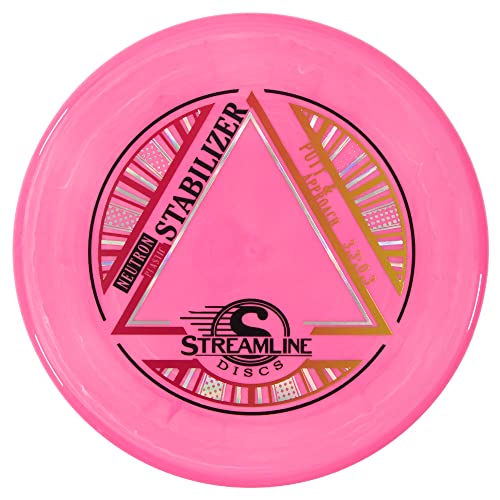
STREAMLINE STABILIZER - The Pilot is designed to be a go-to putter off the tee or on the approach! The Stabilizer has a similar hand feel and depth as the Neutron Pilot, but with a slightly raised shoulder and more pointed nose that produces a flatter and more stable putter.

WHY BUY A PUTTER PACK? - Having a pack of your go-to putter brings many benefits to the way you practice. It's important that you practice putting with disc mold, as this allows you to learn the disc, how it flies, and have the same comfortable feel on every putt. By practicing with many discs you don't need to run and fetch your disc after every putt, allowing you to focus on your form, identify what adjustments need to be made and create a consistent routine that allows you to sink more putts