
You’ve eyed the chains, envisioned the flight, and you’re ready to hit the course—welcome to Disc Golf 101.
You’re about to dive into a game where precision and freedom go hand in hand. We’ll guide you from your first exhilarating tee-off to the satisfying clang of the disc in the basket.
Sharpen your throws, read the fairway, and avoid those rookie mistakes.
Grab your discs; it’s time to play with the skill you’ve always wanted.
The Fundamentals: Building Your Disc Golf Foundation
Why should you start by learning the fundamental rules and techniques of disc golf? Mastery begins with a solid foundation.
Understanding course etiquette is paramount; it ensures you respect fellow players and the sanctity of the game, fostering an environment where freedom and competition thrive.
Similarly, disc selection isn’t about amassing a vast arsenal, but choosing the right tools that liberate your play. Each disc has a unique role, from drivers for long-range throws to putters for precision. Analyze flight ratings and consider your personal throwing style to find your perfect match.
Embrace the basics, and you’ll wield the knowledge to navigate courses with confidence, making every throw count. This is your stepping stone to unfettered play and the ultimate enjoyment of disc golf.
The Powerful Drive: Executing With Control
Your tee-off technique dramatically influences your overall performance and distance on the disc golf course. Grasp driving dynamics by analyzing your body’s motion; it’s not merely about raw strength but the synchronization of your legs, hips, arms, and torso.
Power control is pivotal; too much force and you’ll sacrifice accuracy, too little and you won’t cover the necessary distance. Visualize a smooth flow of energy, starting from your feet, winding up through your core, and culminating in the release of the disc.
Consistent practice will refine your muscle memory, allowing for a fluid, controlled drive. Embrace the freedom of tweaking your form to find a comfortable, effective style that suits your unique physicality and playing preferences.

FLIGHT NUMBERS – Speed 12, Glide 5, Turn -1, Fade 3

Best choice for: New players, Water hazard shots and Tailwind drives
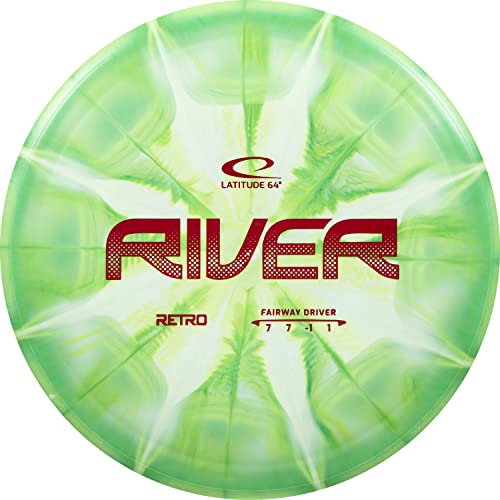
EFFORTLESS GLIDE & PRECISION: Designed for maximum glide and smooth flight, the River is the perfect beginner fairway driver, or and for many will be their farthest flying disc. Whether you're a beginner or an advanced player, the River's unique blend of stability and control allows for so many different shots.
Reading the Fairway: Analyzing and Adapting
Having launched your drive, you’ll now focus on advancing the disc down the fairway with strategic mid-range shots and approaches. It’s crucial to analyze the fairway obstacles that lie ahead—trees, bushes, and wind patterns can all influence your shot selection.
Your goal isn’t just to get closer to the basket, but to position yourself for an unobstructed next throw. Choose your disc wisely; a stable to slightly overstable mid-range is often ideal for precision and control. When facing a dogleg or a tight window, consider a forehand flick or an anhyzer throw to navigate the course.
Always remain adaptable, as the fairway’s ever-changing conditions may dictate a different approach than you initially planned. Your freedom on the course is earned through smart, tactical play.
Approach Precision: Dialing In Your Placement
As you edge closer to the basket, precision becomes your top priority to set up a successful putt. Analyze the basket angles critically; they dictate your shot selection. Should you opt for a hyzer, releasing the disc with an edge down towards your body to curve towards the basket? Or is an anhyzer, releasing with an edge up, the smarter choice to navigate around obstacles?
Remember, the right approach shot minimizes putting distance and maximizes your chances of scoring. It’s not just about power; it’s about strategic placement. Factor in wind conditions and elevation changes too.
Trust in your practiced techniques and choose the shot that promises control and accuracy. This is your moment to outsmart the course and claim your freedom on the green.
Putting Proficiency: Grip, Stance and Focus
When it comes to putting, your grip and stance serve as the foundation for accuracy and consistency. You’ll find that a comfortable yet firm grip allows for better control, while your stance should provide stability and align with your intended putting line.
Analyzing different techniques in these areas can significantly improve your short game, so it’s crucial to experiment and find what works best for you.
Grip Styles
You’ll often find that your grip on the putter can make or break your short game in disc golf. The right grip enhances control over the flight paths and is a critical factor in disc selection. Here’s a concise table explaining different grip styles:
| Grip Style | Description |
|---|---|
| Fan Grip | Spread your fingers underneath the disc for a balance of control and comfort. |
| Power Grip | All four fingers are tucked tightly against the rim, maximizing power and spin. |
| Modified Fan | A hybrid, with some fingers spread and the pinky against the rim for stability. |
| Split Grip | Index finger rests against the rim’s outside, while others support underneath for precision. |
Experiment with these grips to discover what gives you the most consistency and confidence on the green.
Stance Techniques
Transitioning from grip to stance, you need to ensure your footing is stable and comfortable for accurate putting. Unlike the driving posture, putting stance is less about power and more about precision and balance control.
Plant your feet shoulder-width apart to create a solid base. Your lead foot should point towards the basket, with your other foot slightly behind, offering stability without restricting movement.
Focus on centering your weight; balance is key. Avoid leaning too far forward or backward, as this can throw off your aim. Instead, distribute your weight evenly, allowing for a smooth, pendulum-like motion with your arm.
Correcting Common Mistakes: Improving Your Technique
As you progress in disc golf, it’s crucial to recognize and correct common mistakes that can hinder your game.
A flawed grip can compromise your control and distance, while poor footwork often leads to inconsistent throws.
Moreover, failing to account for wind conditions can unexpectedly alter your disc’s flight, so always factor in the breeze before you release.

The Aviar is a straight-flying Putt and Approach with a predictable finish. It is the most popular Putter of all time and has been used to win more World Championship titles than any other Putter.

FLIGHT RATINGS - Speed 3, Glide 2, Turn 0, Fade 1
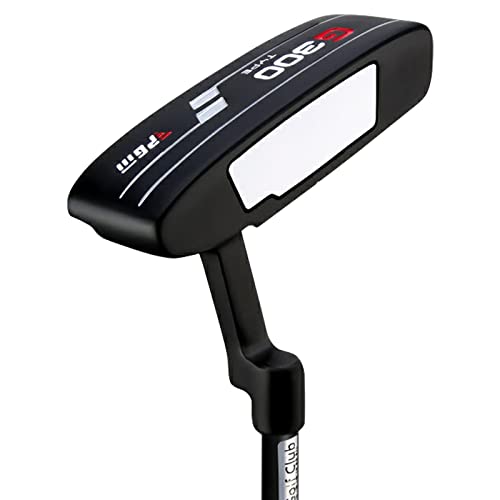
Notched Groove Design for Enhanced Precision: Featuring a notched strike surface design with precise grooves, this golf putter improves interaction between the club face and the golf ball, ensuring stable ball roll and consistent putting accuracy. Ideal for use on all types of greens.
Incorrect Grip Techniques
An improper grip can sabotage your disc golf throws before you ever leave the tee pad. Underestimating the importance of grip strength and release timing is a common oversight. You want a firm grip, but squeezing too tightly causes tension, reducing wrist mobility and affecting release timing. Conversely, too loose a grip leads to a lack of control, causing the disc to wobble or veer off course.
To strike the right balance, focus on a grip that’s secure yet relaxed enough to allow a smooth release. Pay attention to the pressure points between your fingers and the disc. This subtle awareness helps refine your technique, ensuring a consistent throw that’s both powerful and accurate.
Avoid the extremes, and you’ll find your sweet spot – a grip that grants you the freedom to master the course.
Poor Footwork Habits
In disc golf, your approach to the tee with improper footwork can throw off your entire game. You’re seeking freedom on the course, the liberty to execute your vision of the perfect shot. Yet, balance issues and stride inconsistencies often imprison players in a cycle of frustration.
Analyzing your steps can liberate your technique. Here’s a breakdown of common footwork mistakes and how to correct them:
| Mistake | Correction |
|---|---|
| Overstriding | Shorten your steps for control. |
| Understriding | Ensure full extension for power. |
| Unbalanced stance | Center your weight for stability. |
| Irregular rhythm | Practice a consistent cadence. |
| Neglecting pivot | Utilize pivot for fluid motion. |
Master these adjustments, and you’ll stride toward a game that feels boundless, your throws mirroring the freedom you desire.
Overlooking Wind Effects
Understanding wind conditions is crucial as you can’t control the breeze, but you can master how to harness its power for your throws. Wind reading isn’t just about feeling the gusts; it’s an analytical skill that influences your disc selection and ultimately, your freedom on the course.
Assess the wind’s direction and strength. Tailwinds can carry your disc further, while headwinds may require a more stable disc to fight through the resistance. Crosswinds challenge your ability to maintain a straight flight path, demanding strategic disc selection and adjustment in throwing angle.
Don’t let the wind dictate your game. Instead, recognize its patterns and choose your discs wisely, turning a potential pitfall into an advantage that sets you free to excel on the course.