
You’re standing at a crossroads, the disc in one hand, a club in the other. It’s time to explore the clash of the greens.
You’ve got disc golf’s free-spirited flare on one side, and traditional golf’s storied elegance on the other. They’re worlds apart, yet bound by the same spirit of precision and play.
As you dive into their unique charms and surprising similarities, you’ll unravel a tale of two games that challenge the essence of sport itself.
Let the comparison begin.
The Fundamental Goal
In both disc golf and traditional golf, your primary goal is to complete each hole in the fewest number of strokes (or throws) possible.
While the scoring systems in both sports track the number of strokes taken, the course layout dramatically alters your strategic approach. Traditional golf courses, with their vast fairways and manicured greens, demand precision and power.
Disc golf courses, with varied terrain and obstacles like trees and elevation changes, require a blend of accuracy and creativity.
Both layouts challenge your freedom to navigate from tee to hole, yet offer the liberty to tackle each obstacle in your unique style.
Understanding these nuances ensures you’re not just keeping score but savoring the essence of each game.

Gear You Need to Succeed
As you assess the essentials of disc golf and traditional golf, you’ll find the former hinges on a variety of discs, each engineered for specific flight patterns, while the latter requires a set of clubs, each designed for distinct distances and strokes.
The durability of your gear plays a crucial role, with disc golf equipment typically withstanding wear and tear better due to simpler construction and fewer components.
Moreover, a cost comparison reveals that starting out in disc golf often demands a lower financial investment than its traditional counterpart, making it an accessible option for many enthusiasts.

🥏 Disc Golf Pocket Guide is in the size of classic card (2.36 x 3.54 inches). So it's really compact and you can easily carry it with you, store it in your pocket, bag or wallet.


Designed by the player, this ultimate glove gives you the flexibility to control the disc for throwing and catching. It is very light, only 70g and even makes you forget to wear gloves.
Equipment Form and Function
You’ll often find that while both disc golf and traditional golf require precision and skill, the equipment essentials—discs and clubs—differ vastly in form and function.
In disc golf, understanding the flight patterns and the effect of release angles is crucial for mastering various throws. You’re not just tossing a frisbee; you’re manipulating aerodynamics. Conversely, traditional golf demands a mastery of clubs, each designed for specific ranges and strokes.
| Disc Golf | Traditional Golf |
|---|---|
| Flight patterns | Trajectory control |
| Release angles | Swing technique |
| Aerodynamics | Club selection |
| Variety of discs | Variety of clubs |
Freedom in disc golf comes from the ability to shape shots using different discs, while in traditional golf, it’s about selecting the right club for the shot you need. Both require a strategic mind and a keen sense of the tools at your disposal.
Withstanding the Elements
Your disc golf discs and golf clubs each face their own set of challenges, with one’s durability often surprising those new to either sport.
When you delve into material endurance, disc golf discs, crafted from resilient plastics, can withstand significant wear, even when they repeatedly strike trees or rocks. They’re designed to resist the weather impact, maintaining performance despite rain or sun.
In contrast, your golf clubs demand meticulous care; the metal heads and graphite shafts can handle natural elements but are more prone to damage from impact and corrosion without proper maintenance.
It’s crucial to consider how the freedom to roam through varying terrains with minimal concern for gear damage might color your preference between disc golf’s forgiving materials and traditional golf’s precision-engineered clubs.
Financial Freedom to Play
Beyond the resilience of your gear, you’ll find that starting costs for disc golf are generally lower than those for traditional golf, making it a more budget-friendly option.
This accessibility benefit means more freedom for you to enjoy the game without financial strain. When you’re weighing up the environmental impact, less equipment in disc golf translates to a smaller carbon footprint.
Here’s a quick look at the essentials:
| Disc Golf | Traditional Golf |
|---|---|
| Discs: $8 – $15 each | Clubs: $200 – $1500+ |
| Bag: $20 – $100 | Bag: $100 – $400 |
| Accessories: $10 – $50 | Accessories: $20 – $200 |
| Course Fees: Often free | Greens Fees: $25 – $200+ |
Analyzing the table, it’s clear that disc golf is not only kinder to your wallet but also promotes an eco-friendlier approach to sport.
What are the differences in strategy and precision between disc golf and traditional golf?
In disc golf, precision is crucial when it comes to successfully navigating obstacles and hitting the basket. Unlike traditional golf, disc golf requires a different strategy due to the flight characteristics of discs and the unique challenges presented by the course layout. Precision in disc golf is essential for achieving a low score.
Navigating Distinct Terrains
In comparing the playing fields of disc golf to those of traditional golf, you’ll find both striking contrasts and unexpected parallels nestled within their landscapes. Course design in both disciplines often embraces the natural contours of the terrain, crafting an array of challenges that test precision and strategy.
Where traditional golf courses flaunt manicured fairways and greens, disc golf counterparts frequently harness the wildness of their settings, presenting you with a rawer form of play. Both terrains impose their own unique obstacles—water hazards, sand traps, dense woods, and elevation changes—yet the core goal remains: navigate the land effectively to achieve the lowest score.
It’s in these terrain challenges that freedom lovers like you find a thrilling playground, whether wielding a club or tossing a disc.
Mastering Body Mechanics
You’ll find that while disc golf emphasizes a more relaxed wrist-flick for distance, traditional golf demands a complex swing that intertwines precision and power.
Both sports require an acute understanding of physics and body mechanics to navigate courses with finesse.
Surprisingly, your strategic approach to each shot shares a common core, balancing the need for control against the urge to maximize reach.
Harnessing Kinetics
Your technique, whether swinging a club or launching a disc, is pivotal to mastering either sport. In traditional golf, technique refinement is an endless pursuit, with swing analysis breaking down every nuanced movement. It’s about precision and the fluidity of your entire body working in harmony.
In contrast, disc golf demands a different kinetic chain, but the principle of a coordinated effort stands. Here, wrist snap and arm extension are critical, yet both sports share the foundational need for balance and timing.
You’re not just hitting or throwing; you’re sculpting an arc through the air, governed by physics and your own athleticism. Whether you’re craving the open fairways or the wooded courses, your swing is your signature—refine it, and you’ll find freedom in every flight.
The Delicate Balance
Mastery in both disc and traditional golf hinges on the delicate balance between precision and power. You’ll find that course strategy plays a pivotal role in leveraging these elements, compelling you to make informed choices with every swing or throw.
In traditional golf, power drives the ball to great distances, but precision ensures it lands near the pin. Disc golf, on the other hand, demands a keen understanding of aerodynamics and the finesse to shape your throws.
The mental game is crucial, as it governs your ability to stay focused and adjust tactics mid-course. It’s not simply about raw strength or surgical accuracy; it’s the harmony of both that paves the way to success.
You become a strategist, calculating risks and benefits, always threading the needle between unbridled force and meticulous control.
Respecting the Sport
Despite their differing terrains and tools, both disc golf and traditional golf demand a high level of player etiquette from each participant.
You’re expected to abide by unwritten social manners and courtesy rules that ensure a respectful and enjoyable experience for all. Analyzing these etiquettes, you find similarities in the silent focus during a player’s turn and the gracious handling of equipment.
| Disc Golf Etiquette | Shared Principles | Traditional Golf Etiquette |
|---|---|---|
| Yield to faster groups | Respect for players’ focus | Quiet on the tee box |
| Minimize course alterations | Care for the course | Repair divots and ball marks |
| No littering | Congeniality among competitors | Strict dress code |
You recognize that freedom on the course isn’t about anarchy; it’s about mutual respect that allows everyone their fair share of the fairway.
Expressing Tactical Freedom
Moving from the shared etiquettes of both games into their distinct variations, you’ll find that each sport’s unique rules and gameplay styles reflect the individual character of its playing field.
Traditional golf’s course design demands precision; fairways and greens are meticulously groomed to challenge your strategy and skill.
In contrast, disc golf courses often embrace the natural terrain, with trees and elevation changes dictating a more adaptable play style. You’re not just playing the course; you’re playing against the whims of the landscape, which can be as unpredictable as it’s liberating.
Both games, while fundamentally grounded in the same concepts, offer you avenues to express tactical freedom. However, it’s the way you navigate these terrains—either with a club or a disc—that truly reveals your personal approach to these venerable games, if you are new learn more about disc golf today.
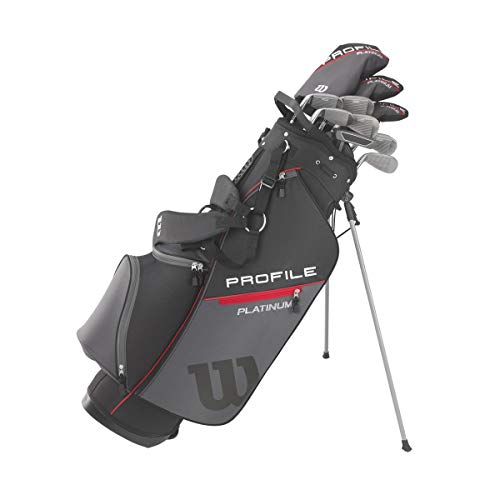
Includes 10 clubs: Driver, 5 Wood, 5 Hybrid, 6-SW, Putter

𝗖𝗢𝗠𝗣𝗟𝗘𝗧𝗘 𝗝𝗨𝗡𝗜𝗢𝗥 𝗦𝗘𝗧: This kids golf set includes a driver, hybrid wood, #7 iron, #9 iron, putter, stand bag, and 2 headcovers, which are everything a young golfer needs. Ideal as toddler golf clubs or youth golf clubs for beginners building confidence.

Right Handed 460cc Titanium Driver Included: This complete M5 set is purpose-built for right-handed players, featuring a full-size 460cc titanium driver for maximum forgiveness and distance off the tee. The driver, fairway wood, hybrid, and all irons are right hand - no need to shop separately.