
As you step up to the tee pad, your grip tightens around the disc, prepared to launch it down the fairway. You’ve mastered the basics, but do you know about the intricacies of the seven different types of disc golf throws? Each throw offers a unique approach to conquer obstacles and shape your shots on the course.
Exploring throwing techniques can elevate your game to new heights, providing you with a competitive edge and a deeper understanding of the sport.
Key Takeaways
- Backhand, forehand, and overhead throws form the foundation of disc golf throwing techniques.
- Hyzer and anhyzer throws offer control and precision for shaping shots around obstacles.
- Turnover and roller throws provide versatility in navigating tight spaces and low-hanging obstacles.
Backhand Throw
To execute a successful backhand throw in disc golf, grip the disc with your fingers on the inside rim and face perpendicular to the target. Your grip is important as it allows you to have control over the disc during the throw.
When it comes to stance, positioning yourself facing perpendicular to the target provides you with the best angle to release the disc accurately. As you wind up for the throw, remember to smoothly pull the disc across your body, generating the necessary momentum for a powerful and precise release. The release point is a critical moment; make sure your arm is fully extended towards the target to throw the disc effectively.
Backhand throws are commonly used for achieving straight shots and turnovers in disc golf. Mastering this technique will greatly enhance your gameplay, allowing you to navigate the course with finesse and accuracy. By focusing on your grip, stance, windup, and release point, you can refine your backhand throw and elevate your performance on the disc golf course.

CORRECTS HAND POSITIONING ON EVERY SWING: Molded guide attaches to your club and places your fingers, thumbs, and palms in the correct neutral grip position; helps eliminate common faults like a strong grip, weak grip, or open right hand that lead to slicing and hooking

LIFETIME WARRANTY: If you make a good quality product, you should back it up. This is why Rogue Iron Disc Golf designs our gear to last season after season.

Training grip provides the correct hand position for the right golf grip
Forehand Throw
When executing a forehand throw in disc golf, key points to take into account are your grip and stance, release technique, and control over the flight path.
Your grip should involve positioning your fingers on the outer rim of the disc, while facing the target with an open body stance.
As you release the disc, focus on snapping your arm forward to generate spin and achieve the desired flight path.
Grip and Stance
For a successful forehand throw in disc golf, gripping the disc with your fingers on the outer rim is essential for control and spin. When setting up your stance, face the target with an open stance to maximize power.
As you release the disc, focus on executing a proper wrist flick to generate the spin needed for accuracy. To add power and distance to your throw, lead with your elbow and engage your hips by twisting them during the throw.
Forehand throws are great for achieving a right-to-left flight path and are particularly favored by players with a background in baseball or football. Mastering the forehand grip and stance can greatly enhance your performance in disc golf, allowing you to control the flight of the disc with precision.
Release Technique
As you get ready to execute the forehand throw in disc golf, make sure that the front of your body is directly facing the target for best accuracy and control.
The forehand throw involves a wrist flick release to generate spin and stability. This technique is favored by baseball players due to its similarity to their throwing motion.
Unlike the backhand throw, the forehand throw finishes in the opposite direction. To execute the forehand throw with proper technique, extend your arm to the side and focus on the wrist flick release.
Flight Path Control
Utilizing the natural fade of the disc, the forehand throw in disc golf offers precise flight path control. The angle of release is important in determining the direction of the flight, influencing how the disc curves through the air.
To enhance stability and accuracy, mastering the proper wrist snap is essential when executing a forehand throw. Disc selection also plays an important role in achieving the desired flight paths with this type of throw.
Overhead Throw
When throwing overhead, it’s crucial to take into account the grip, stance, windup, and release point.
The grip involves holding the disc above your shoulder, and your stance can vary depending on the trajectory you want.
Bringing the disc back over your shoulder for the windup gives power to your throw.
Types of Overhead Throws
Gripping the disc above your shoulder, the Overhead Throw, also known as a hammer or Tomahawk throw, provides disc golfers with unique flight paths. This throw is perfect for maneuvering around obstacles and executing shots with different trajectories.
When using the Overhead Throw, your windup involves bringing the disc back over your shoulder before releasing it overhead towards your target. The versatility of this throw allows you to address specific situations on the course effectively.
Overhand Vs. Thumber Techniques
In mastering the Overhand Vs. Thumber Techniques for the Overhead Throw in disc golf, focus on developing a quick yet forceful motion to enhance spin and distance.
The Overhand Throw, also known as a Thumber, involves holding the disc vertically, with the thumb on top and fingers underneath. This technique is effective for maneuvering obstacles or tight gaps on the course, thanks to its high trajectory from a release point overhead.
To execute a successful Overhand Throw, guarantee a strong and swift movement to generate the required spin. Consistency in practice is key to achieving stability and accuracy with Overhand Throws.
Hyzer Throw
To execute a successful hyzer throw in disc golf, angle the disc downward at release to initiate a left-curving flight path. This technique takes advantage of the disc’s natural angle, causing it to veer left for right-handed players.
The hyzer throw is ideal for maneuvering around obstacles on the course by consistently producing a left curve. By aligning your body away from the target, you can guarantee the disc follows the desired flight path.
This throw is particularly useful when a shot requires a sharp turn to the left, making it a valuable skill in a disc golfer’s arsenal. Understanding the mechanics of the hyzer throw and practicing its execution can greatly enhance your gameplay.
Anhyzer Throw
Executing an anhyzer throw in disc golf involves angling the disc away from your body to curve shots to the right for right-handed players. To achieve this, your grip requires a slight adjustment from the typical backhand grip to help the disc follow the desired flight path.
Your body angle is important in an anhyzer throw, as you need to lean towards the target to complement the disc’s angled flight. The release point is when you tilt the disc upward, allowing it to curve to the right as intended.
Anhyzer throws are valuable for shaping shots efficiently, especially when you need to navigate obstacles on the disc golf course. By mastering the anhyzer throw, you can add versatility to your game, enabling you to tackle challenging course layouts with greater precision and control.
Turnover Throw
When throwing a turnover shot in disc golf, angle the disc on an anhyzer to achieve a rightward curving flight path for right-handed players.
The turnover throw is a technique used to shape shots that curve to the right during flight. By adjusting the release angle and point, players can control the flight path of the disc, making it a versatile skill to have in your repertoire.
The key to a successful turnover throw lies in the initial angle at which the disc is released. This anhyzer angle causes the disc to turn to the right, creating a graceful curve through the air.
Mastering the turnover throw adds a layer of control and finesse to your game, allowing you to navigate challenging fairways with precision. Practice different release angles and experiment with your technique to perfect the turnover shot and elevate your disc golf game to new heights.
Roller Throw
For the roller throw in disc golf, releasing the disc low to the ground is essential for maneuvering through tight gaps or low-hanging obstacles effectively. This shot is particularly useful when traditional flight paths are blocked, requiring a different approach to navigate the course.
To execute a successful roller throw, it’s important to use an extremely understable disc that can roll smoothly upon release. The angle of release is also key; a slight tilt can determine the direction and distance the disc will roll.
By adjusting the speed and angle of release, you can control the path of the disc to suit different course conditions. Practice with various discs and angles to hone your roller throw technique and adapt to the challenges presented by different courses.
With the right technique and disc selection, the roller throw can be a valuable addition to your disc golf arsenal, allowing you to navigate obstacles with finesse and precision.
What Techniques Can I Use to Improve My Disc Golf Throwing Velocity?
Improving your disc golf throwing velocity can be achieved using a few key techniques. Enhancing your physical strength and flexibility, practicing proper throwing mechanics, and utilizing the right disc for your throwing style can all contribute to faster disc golf throws. The fastest disc golf throws recorded have showcased the effectiveness of these methods.
Conclusion
To sum up, mastering the different types of disc golf throws can greatly enhance your performance on the course. By understanding the unique characteristics and strategic advantages of each throw, you can navigate obstacles with precision and control.
Whether it’s the backhand, forehand, overhead, hyzer, anhyzer, turnover, or roller throw, honing these techniques will improve your versatility and overall enjoyment of the game.
Keep practicing and experimenting with these throws to elevate your disc golf skills to the next level.

The Wraith is a versatile max-distance driver for players with moderate arm speed. It was a game changer when first introduced and has remained a staple in players’ bags for nearly 20 years.
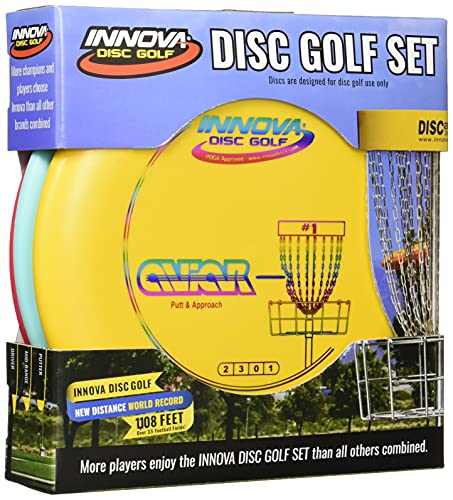
Complete Set: Includes One Driver, One Mid-Range And One Putter

This technical disc golf design showcases advanced throwing skills, flight control, and the art of mastering the hyzer flip.