
You’re no stranger to the course, but mastering overstable discs can elevate your game to new heights. Here’s your guide to harnessing their power, ensuring you’re not just tossing; you’re commanding the skies with intent.
With a focus on grip, stance, and wind play, you’ll learn to make precision your ally. Embrace the freedom of the fairway, armed with pro techniques that’ll have those discs slicing through the air on your terms.
Let’s dive in.
Understanding Overstable Flight
An overstable disc is your key to achieving sharp, reliable fades and fighting strong winds on the disc golf course.
When you’re making your disc selection, consider the overstable options for their predictable flight patterns, which resist turning over even when you’re throwing into a headwind.
These discs aren’t just about power; they’re about control and the freedom to navigate the course with confidence.
Understanding how overstable discs behave is crucial. They’ll begin their flight straight but will start to hook left (for a right-hand backhand throw) sooner and more aggressively than stable or understable discs.
This characteristic makes them indispensable in your arsenal, especially when you need to maneuver around obstacles or ensure a disc lands within a tight fairway.
Choose wisely, and let the overstable disc be your guide to mastery on the greens.
Dialing In Your Grip for Overstability
To harness the full potential of overstable discs, you’ll need to refine your grip to ensure a consistent and controlled release.
Analyze your finger positioning; it’s critical for generating the spin required for overstability. Your index finger should be firmly under the disc’s rim, while your other fingers are securely against the flight plate. This arrangement offers stability without sacrificing the quick snap needed for distance.
Wrist mechanics also play a pivotal role. Keep your wrist firm but not rigid, allowing for a fluid motion that culminates in a spring-like release. This precise movement maximizes the disc’s inherent overstability, giving you the liberty to shape your shots with confidence.

Nuke OS - Distance Driver: Speed 13 | Glide 4 | Turn 0 | Fade 4 | Stability 2.2. Please note: Disc colors and stamp will vary, weight range 160-176g. The Nuke OS is the extremely overstable version of the popular max speed Nuke distance driver, perfect for full power shots and high winds.

FLIGHT RATINGS - Speed 9, Glide 3, Turn 0, Fade 4 Dazzling in appearance, the Halo Firebird still has an abundance of overstability that players crave. Backhand. Forehand. Overhand. However you throw it, this disc delivers.

Ultimate Comfort for the Course & Beyond - Crafted from high-quality, breathable cotton, these crew socks provide all-day comfort whether you're on the disc golf course or relaxing at home. They offer excellent cushioning and moisture-wicking to keep your feet dry and comfortable during long games or daily wear.
Stance and Alignment Fundamentals
With your feet positioned shoulder-width apart, you’ll establish a stable base for unleashing the power of overstable discs. This footwork fundamental is crucial for maintaining balance control throughout your throw.
Analyze your stance: Are your toes pointing slightly outward? This subtle adjustment allows for a wider range of motion, offering you the freedom to pivot with precision.
Your body alignment is equally important. Align your hips and shoulders with your target; this ensures that your energy transfers directly into the disc’s flight. Keep your head down and your eyes focused on your line; let your lower body lead the rotation while your upper body follows in a smooth, controlled manner.
Master this, and you’ll dominate the skies with your overstable arsenal.
Power and Release Angles
You’ll find that harnessing the full potential of overstable discs hinges on your snap strength and the precision of your release angles. Understanding the dynamics between a hyzer and an anhyzer throw is crucial; each serves a unique purpose based on the course layout and wind conditions.
Let’s break down the mechanics behind these throws to elevate your control and distance on the course.
Snap Strength Required
Harnessing the full potential of overstable discs demands a firm snap, ensuring your throw cuts through the air with intentional power and angle.
Mastering finger positioning is crucial; a secure grip amplifies the snap’s efficacy. Your wrist mechanics are equally vital. A crisp flick, akin to snapping a towel, releases the disc with a spin that stabilizes its flight despite wind resistance.
Power isn’t mere muscle; it’s technique and timing. Your release angle dictates the disc’s initial flight path, which, with an overstable disc, is essential to predict its characteristic fade. Develop a consistent release angle, and you’ll command your throws with precision.
Hyzer vs. Anhyzer Release Angles
Every throw you make with an overstable disc can be fine-tuned using either a hyzer or an anhyzer release, significantly affecting the disc’s flight pattern and final destination.
Understanding the flight dynamics and release mechanics is crucial. A hyzer release angles the disc’s edge downward relative to your throwing hand, favoring a predictable leftward arc (for right-hand backhand throws). Conversely, an anhyzer release tilts the disc’s edge upward, encouraging a rightward curve.
| Release Type | Effect on Flight Path |
|---|---|
| Hyzer | Leftward arc |
| Anhyzer | Rightward curve |
| Hyzer Power | Increases stability |
| Anhyzer Power | Decreases stability |
Master these angles, and you’ll unlock the freedom to navigate the course with precision, no matter the challenge ahead.
Adjusting for Wind Conditions
When you’re facing the capricious nature of the wind on the course, your first step is to accurately identify the wind type you’re up against.
You’ll need to adjust your throw angle to maintain control of your overstable discs, considering the headwinds and tailwinds that can drastically alter their flight.
It’s vital to approach each toss with a strategic mindset, as the wind won’t forgive a lack of precision in your throw.
Wind Type Identification
Understanding each type of wind you’ll encounter is crucial to adjusting your throw with overstable discs effectively. Weather patterns and wind intensity are the metrics that should guide your strategy on the course.
A headwind, for instance, amplifies the stability of your disc, requiring a lower angle and more power. Conversely, a tailwind will decrease the disc’s perceived stability, necessitating a higher angle of release to maintain the desired flight path.
Crosswinds demand even more finesse; they can push your disc off course, so compensate by aiming into the wind and selecting a disc with enough stability to fight through it.
Analyze the wind’s behavior before each throw, and you’ll retain control over your game, regardless of the capricious skies.
Throw Angle Adjustment
Your throw’s angle is pivotal in harnessing the wind’s influence, whether you’re contending with a gusty headwind or a deceptive tailwind.
Adjusting your release angle can significantly alter the flight dynamics, offering you freedom to navigate the course with precision. Release consistency is crucial; practice maintaining a stable wrist position in various wind conditions to achieve reliable results.
Here’s a quick guide to adjust your throw in different winds:
| Wind Condition | Throw Adjustment |
|---|---|
| Gusty Headwind | More hyzer angle |
| Strong Tailwind | Flatter release |
| Crosswind – Left | Aim left, anhyzer |
| Crosswind – Right | Aim right, hyzer |
| Variable Winds | Adapt per throw |
Analyzing the wind and adjusting accordingly will empower you to conquer the skies with your overstable discs.
How Does Mastering the Backhand Follow Through in Disc Golf Relate to Using Overstable Discs for Domination?
Mastering the backhand follow through is essential in disc golf for achieving distance and accuracy. When using overstable discs, the proper follow through can generate the power needed to control these discs for dominating throws. The technique allows players to harness the unique flight characteristics of overstable discs for maximum performance.
Practice Drills and Exercises
To harness the potential of overstable discs, you’ll need to integrate specific practice drills and exercises into your routine. Understanding flight dynamics is crucial; so begin with fieldwork focused on observing how different overstable discs behave. Start by experimenting with disc selection, throwing each one with varying degrees of power and angle to learn their unique characteristics.
Set up targets at different distances and elevations, aiming to hit them consistently with an overstable driver or mid-range. This drill sharpens your ability to predict flight paths and control disc stability. Additionally, perform repetition throws into a headwind to gauge stability under adverse conditions.
As you practice, you’ll develop a nuanced command over your discs, liberating your game from unpredictability and elevating your confidence on the course.
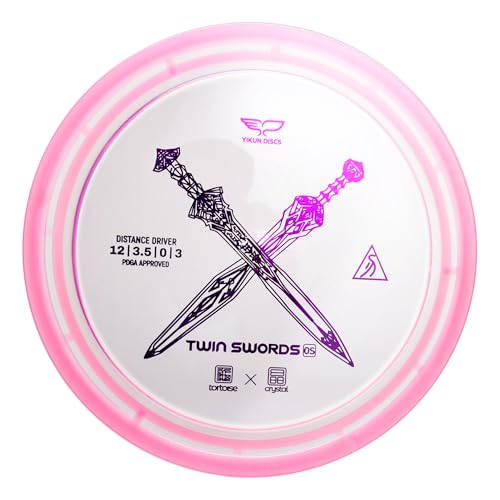
As the first disc featuring SHELL dual-ring technology, this driver delivers enhanced rotational stability for superior wind resistance and effortless distance. Its optimized rim-core balance reduces power requirements while maintaining consistent flight patterns.

QUIET - Reduces noice from basket chains for a quieter practice
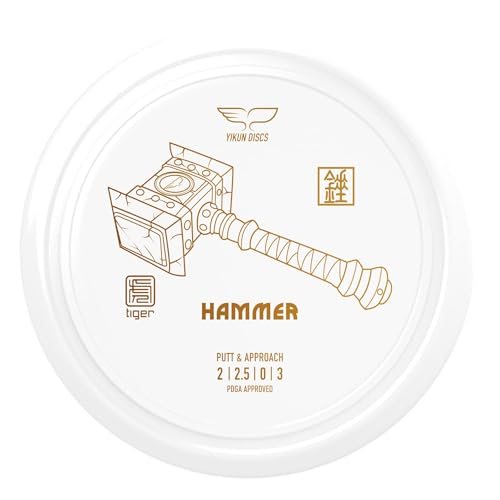
PDGA Approved for All Competitive Play – Fully certified by the Professional Disc Golf Association for use in every tournament and league. Putt with assurance knowing your disc meets all professional standards.