
You’re determined to unlock the secrets of a powerful disc golf drive, and it starts with mastering the run-up.
This guide offers precise, step-by-step techniques to refine your stance, footwork, and grip.
You’ll learn the nuances of the X-Step, fine-tune your body mechanics, and choose the right disc for maximum distance.
Embrace the freedom of improvement with tailored practice drills and expert advice to avoid common pitfalls.
Let’s get you throwing farther with confidence.
Harness Momentum in the Run-Up
Every successful disc golf drive relies on mastering your run-up, which adds momentum and power to your throw. To optimize your run-up speed, begin with mental preparation. Visualize the path your disc will take, and let this image guide your movements.
Your run-up should be consistent and controlled, not haphazard. It’s crucial to find a rhythm that complements your style, allowing your body to move freely and powerfully.
The speed of your run-up should match your ability to maintain balance and form, ensuring each component of your throw is executed with precision. Remember, the goal isn’t just speed, but the integration of speed with technique to create a seamless, effective drive.
Embrace this freedom of movement to unleash your full potential on the course.
Balance and Footwork Fundamentals
After honing your run-up’s rhythm, it’s time to focus on your stance and footwork, as they’re the foundation of every precise and powerful drive.
Proper stance aligns your shoulders and hips, optimizing hip rotation and shoulder alignment for maximum energy transfer. Your footwork must be deliberate and consistent, setting the stage for a fluid motion that culminates in an explosive release.
| Aspect | Technique | Benefit |
|---|---|---|
| Stance | Balanced, shoulder-width apart | Stability for hip rotation |
| Lead Foot | Pointed toward target post-run-up | Ensures proper shoulder alignment |
| Trail Foot | Perpendicular to lead for brace | Facilitates weight transfer |
| Hip Rotation | Initiate before arm pull | Generates torque and power |
| Follow-Through | Complete rotation, pointing forward | Maintains momentum, accuracy |
Master these basics to enjoy the freedom of launching your disc golf drives with confidence and precision.


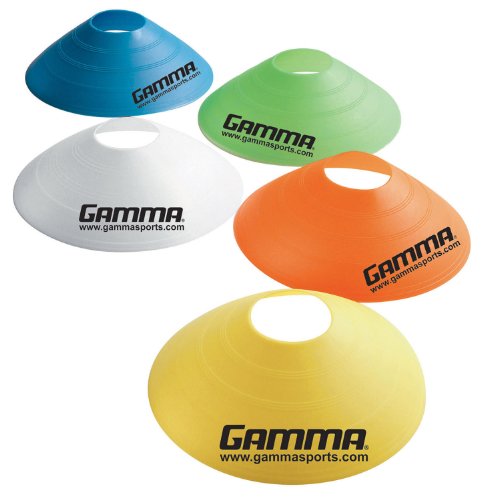
MULTI-SPORT: Gamma training markers are great for any sport! Tennis, Soccer, Basketball, Football, Golf, Baseball, Kickball – You name it! Indoor or outdoor, court or field.
Optimize Grip for Spin and Velocity
With your stance and footwork as the groundwork, perfecting your disc grip is the next crucial step to amplify your drives.
Precise finger positioning increases the disc’s spin and speed. For a power grip, curl your fingers tightly under the disc’s rim, with your thumb positioned on top to apply pressure. Ensure your index finger’s knuckle is under the disc’s edge to secure leverage.
Developing a strong wrist snap is also vital for generating power. This motion should be swift and fluid, releasing the disc at the peak of your arm’s forward motion. Practice this wrist action diligently; it’s the linchpin in transferring your body’s momentum into the disc, essential for those long, commanding drives you’re striving for.
Master the Power of the X-Step
Having mastered your grip, you’ll now enhance your drives with the X-Step, a sequence that boosts your throwing distance significantly.
The X-Step is pivotal for drive initiation, marking the transition from static stance to dynamic motion. Begin by stepping forward with your lead foot. As you cross your trailing foot behind, you’re engaging in momentum harnessing, central to the X-Step’s efficacy. This cross-step creates a coil in your hips, priming your body for the explosive release.
Next, plant your lead foot again, facing the target, and uncoil your body, transferring the harnessed energy into your throw. Precision in the X-Step’s execution ensures that your subsequent actions—pull-through and release—are both fluid and forceful, maximizing the freedom your disc craves to soar.
Synchronize Motion for Maximum Force
To achieve maximum drive distance, you’ll need to master the arm’s optimal angle of release.
This involves synchronizing your weight shift with the arm movement for a seamless transfer of power.
Precision in this coordination is crucial for enhancing your disc’s velocity and accuracy.
Optimal Arm Angle
Your arm’s angle is crucial in synchronizing body mechanics and timing to unleash powerful disc golf drives.
Elbow positioning and shoulder alignment are fundamental to achieving the optimal arm angle. Ensure your elbow is neither too high nor too low, and your shoulder should be aligned with your target upon release.
This precision in your form allows you to maximize freedom in your movements, translating into distance and accuracy on the course.
| Aspect | Detail | Impact on Drive |
|---|---|---|
| Elbow Position | Slightly below shoulder level | Increases control and power |
| Shoulder Align | Parallel to target line | Enhances accuracy and distance |
| Arm Extension | Full extension before release | Maximizes drive force |
Synchronized Weight Shift
Mastering a synchronized weight shift is key to amplifying your disc golf drives with enhanced power and stability. To achieve optimal weight coordination, you need to understand the mechanics of your body’s movements.
Begin with your feet shoulder-width apart to maintain a solid base. As you initiate the run-up, focus on smoothly transferring your weight from the back foot to the front foot. This momentum harnessing is crucial; it’s the linchpin that translates your body’s kinetic energy into the disc.
Your weight shift must coincide with your arm’s pull-through for maximum efficiency. As your lead foot plants, your hips should rotate, and your weight should propel forward, aligning with the release of the disc.
This synchronization ensures that you’re not merely throwing with your arm but driving with your entire body, unlocking freedom and distance in your throw.
Matching Disc to Conditions
Choosing the right disc can significantly ramp up your driving distance on the course.
To unleash your full potential, you must understand the disc’s flight characteristics and how they interact with varying weather conditions. A disc with a higher speed rating isn’t always the best choice if it doesn’t match your throwing power or the wind’s whims.
Here’s a concise table to guide your selection:
| Disc Type | Ideal Condition |
|---|---|
| Understable | Tailwind or calm weather |
| Stable | Moderate winds, versatile |
| Overstable | Headwind, requires more power |
Embrace the freedom to experiment with different discs. Analyze their behavior in the air and adjust your selection to harness the conditions on the course. Precision in your choice will lead to mastery of distance driving.
Drills to Refine Technique
Transitioning from disc selection, refine your technique with targeted practice drills to boost your driving power. Optimize your driving posture by practicing the X-step, ensuring your body’s kinetic chain is fully engaged.
Start slowly, focusing on the weight transfer from your back foot to your front. Gradually increase your speed as you become more confident, maintaining a low center of gravity for stability.
Develop your mental focus with visualization exercises. Picture the flight path you want your disc to take before each drive. This mental rehearsal will reinforce muscle memory and boost your confidence on the course.
Can Disc Golf Bracing Techniques Improve Drive Distance in Regular Golf?
Mastering the art of disc golf brace can potentially improve drive distance in regular golf by enhancing stability and power transfer through the lower body. Efficient bracing techniques can help generate more rotational force and allow for a stronger and more accurate drive in traditional golf.
Correcting Errors for Consistency
As you refine your run-up technique, it’s critical to recognize and correct common errors that can impede your drives.
Incorrect grip technique, such as overly tight or loose holds, can significantly affect disc flight and control.
Additionally, improper footwork and the tendency to overpower your throw can lead to inconsistency and reduced distance on the course.

SIZE 8-14 - Fits men's sizes 8-14 US

【GOLF ACCESSORY FOR IMPROVED TECHNIQUE】DOES NOT INCLUDE TEE CLAWS. Use our alignment aid lanyards instead of outdated alignment sticks to improve your alignment, ball position, swing path, target line, putting, chipping, pitching, fielding and so much more. A versatile training aid that will help improve your technique
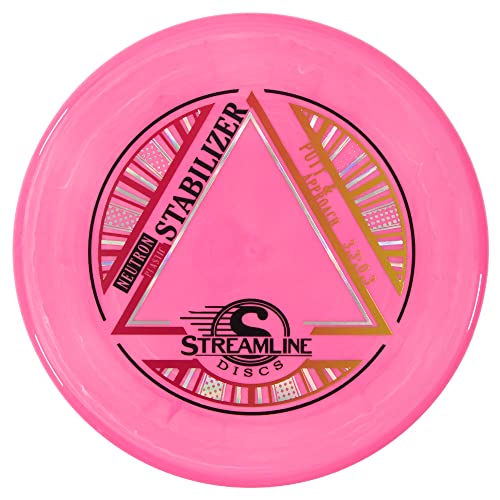
STREAMLINE STABILIZER - The Pilot is designed to be a go-to putter off the tee or on the approach! The Stabilizer has a similar hand feel and depth as the Neutron Pilot, but with a slightly raised shoulder and more pointed nose that produces a flatter and more stable putter.
Grip Technique Errors
In terms of grip technique, you’ll want to ensure that your fingers are neither too cramped nor too loose around the disc to avoid compromising your drive’s power and accuracy.
Precise finger placement is critical; your grip must be firm enough to maintain control but flexible enough to allow a dynamic wrist snap. This wrist snap is the linchpin of a powerful release, providing the spin necessary for distance and stability in flight.
Avoid the common error of gripping with a flat or inverted wrist, which can severely limit the effectiveness of your wrist snap and, consequently, your drive potential. Instead, maintain a natural wrist angle, fostering the freedom for a full range of motion that culminates in that explosive release.
Poor Footwork
While mastering your grip is crucial, don’t overlook the importance of your footwork; even minor missteps can significantly reduce the power and accuracy of your drives.
Your footwear choice plays a pivotal role in ensuring stability and traction during your run-up. Opt for shoes designed for disc golf or similar sports that provide a balance of grip and comfort.
Incorporate balance drills into your practice routine to enhance your footwork. Focus on maintaining a consistent weight distribution throughout your run-up. Avoid common mistakes like overstepping, which leads to an imbalance, or dragging your back foot, which saps momentum.
Precision in your steps ensures a fluid motion and unleashes the full potential of your driving power.
Overpowering the Disc
You’ll often compromise your drive’s accuracy and distance when you try to throw the disc too hard.
Excessive force leads to erratic release angles, diminishing your control and the disc’s intended flight path. Remember, a clean, controlled release with a consistent angle is pivotal for capitalizing on the disc’s design and aerodynamics.
Factor in wind considerations too. Overpowering can exacerbate the effects of headwinds or tailwinds, pushing the disc off course. Instead, focus on harnessing the wind to your advantage by adjusting your throw’s power and angle accordingly.
Achieve freedom in your game by practicing restraint. Dial back the power, emphasize technique, and you’ll find your drives gaining both distance and precision, as you master the art of not overpowering the disc.