
You’re eyeing that tight fairway, the basket teasingly out of a straight line’s reach. It’s time to bend your throw around obstacles with a masterful anhyzer.
You’ll need the right disc, a polished technique, and the guts to break free from conventional play.
Let’s dive into the art of carving the air with discs that turn right, unlocking new angles and opportunities on the course.
Get ready to turn the tables and elevate your disc golf game.
The Physics Behind Anhyzer Flight
In your quest for disc golf mastery, the anhyzer throw—your go-to technique for making a disc curve right—is crucial to diversify your approach shots. Grasping the flight physics behind this throw empowers you to navigate obstacles with finesse.
To execute an anhyzer, you’ll adjust your release angle, tilting the disc so the outer edge is higher than the inner edge when leaving your hand. This posture encourages the disc to follow an arc that defies the natural fade, curving to the right for a right-handed backhand (RHBH) thrower.
It’s a liberating skill, allowing you to craft shots that break free from conventional flight paths. Mastering the anhyzer demands practice, but once you’ve honed this technique, you’ll command the course with unparalleled creativity.
Selecting Discs for Optimal Anhyzer Control
While you’re perfecting your anhyzer throws, choosing a disc that complements this shot is crucial for optimal performance. Pay close attention to disc stability and flight ratings; these parameters guide your selection toward a disc that naturally curves to the right for right-handed throwers (or left for lefties).
A disc with higher turnover and less fade, often indicated by a lower stability rating, will enhance your anhyzer shots. Look for a rating that suggests a predictable rightward flight under power. Remember, a disc that’s too overstable may fight against the anhyzer angle, undermining your efforts for freedom in shaping your path through the skies.
Ultimately, the right disc will feel like an extension of your will, responding intuitively as you command the course with precision.

🥏 Disc Golf Pocket Guide is in the size of classic card (2.36 x 3.54 inches). So it's really compact and you can easily carry it with you, store it in your pocket, bag or wallet.


Executing a Controlled Rightward Release
To master the anhyzer shot for a right curve, you’ll need to adjust your grip, stance, and release angle.
Grasp your disc with confidence, ensuring your fingers are positioned for a secure, yet flexible, hold.
Align your stance with your intended flight path, allowing your body to channel energy fluidly into the throw.
Your release angle is critical; tilt the disc slightly with the outer edge higher than the inner edge.
This angle, paired with your arm’s smooth, whipping motion, capitalizes on flight physics to carve the air with your disc.
As you release, envision the disc riding the invisible waves of the wind, curving right with precision dictated by the forces you’ve harnessed.
Freedom in flight begins with mastery over these elements.
Refining Your Technique Through Targeted Training
Perfecting your anhyzer shots requires specific practice drills that’ll refine your technique and boost your accuracy on the course.
Begin by focusing on release angles; they’re crucial for sculpting the desired flight path. Position yourself in a field and practice throwing with varied angles, noting how each disc behaves. Pay attention to the wind effects, too—understand how a gentle breeze can transform a good shot into a perfect one or send it off course.
To gain precision, set up targets at different distances and heights, aiming to curve around obstacles. This simulates actual course conditions and develops your skill in reading the environment. Consistent practice will liberate your anhyzer shots from inconsistency, leading to a game where you confidently command the disc to dance right, exactly as intended.
Anhyzers as Creative Course Strategy
Mastering anhyzer shots not only enhances your technique but becomes a strategic asset when navigating the complex terrain of a disc golf course.
Understanding the flight physics of your discs allows you to carve paths through tight wooded areas or around obstacles that demand a rightward bend. You’ll find freedom in shaping shots that conform to the landscape, turning potential hazards into advantages.
Factor in wind effects; a headwind can amplify an anhyzer’s turn, while a tailwind might flatten your disc’s flight. Use this knowledge to your benefit—select discs and angles that work with the wind, not against it.
Anticipate how the wind will interact with your anhyzer’s unique flight characteristics, and you’ll command the course with precision, turning what once were challenges into your playground.
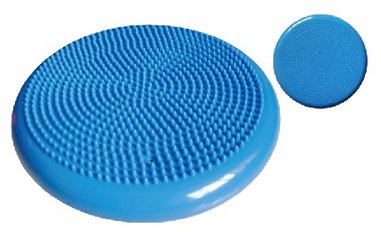
Therapist’s Choice Pre-Inflated Air-Filled Stability / Balance Disc

Best choice for: Straight Line Driver, Anhyzer Shots and Roller Shots
Best choice for: Straight Line Driver, Anhyzer Shots and Roller Shots