
Sure, you could keep blaming the wind every time your disc decides to take an unplanned scenic route, but perhaps it’s time to face the music: your forehand could use a tune-up.
As you stand there, disc in hand, the realization that mastering forehand precision is no less complex than learning to fold a fitted sheet may slowly start to dawn on you. It’s not just about the power behind your throw; the subtle intricacies of grip, stance, and the mysterious art of choosing the right disc all conspire to either elevate your game or send your disc on yet another unexpected voyage.
You know you’ve got the potential to thread your disc through the tightest of fairways, but what’s missing? Stick around, and you might uncover the secrets to taming those erratic overthrows, transforming your game from a wild guessing game into a showcase of skillful intention.
Understanding Forehand Mechanics
Mastering the forehand throw in disc golf hinges on precise biomechanics and a clear understanding of the arm’s rotational forces. You’ve got to dissect the motion: it starts with a controlled grip, where freedom in your wrist is paramount. This isn’t about brute strength; it’s about finesse and channeling energy efficiently.
You’re aiming for a whip-like action, where your forearm and wrist synchronize to unleash the disc. Your elbow acts as a pivot, and the timing of this sequence is critical. Overextension or premature rotation can send your disc veering off course.
Analyze your release point—too early, and you’ll likely underthrow; too late, and you’ll overthrow. Dial in this mechanic, and you’ll command your disc’s flight with precision, asserting your freedom over the course.
Grip Techniques for Control
Building on the intricacies of forehand mechanics, refining your grip is the next step to ensuring each disc release mirrors your strategic intent. Your fingers are the last point of contact, thus precision in their placement is non-negotiable. Consider these grip adjustments for heightened control:
- Stacked Grip: Align your index and middle fingers beneath the disc, parallel to each other. This stabilizes the disc’s flight, reducing errant wobbles.
- Power Grip: Tuck all four fingers underneath, with your thumb applying pressure on top. This grip trades some finesse for increased velocity.
- Fan Grip: Spread your fingers out beneath the disc. It allows for a more nuanced release, giving you the liberty to execute delicate upshots.
Each grip has its own merits. Analyze the course, understand the conditions, and adapt your grip to the demands of each throw.

CORRECTS HAND POSITIONING ON EVERY SWING: Molded guide attaches to your club and places your fingers, thumbs, and palms in the correct neutral grip position; helps eliminate common faults like a strong grip, weak grip, or open right hand that lead to slicing and hooking

WHY SHOULD I USE A CHALK BAG? – The Hyzer Hound Discs chalk bag was designed to help disc golfers increase their grip and deal with sweaty hands during the heat of summer! Simply hit the bag on disc or rub between your hands for a could of seconds before each shot and let it take effect. It is difficult to be confident in a shot when your hands are slippery and sweaty. We will fix this for you

Training grip provides the correct hand position for the right golf grip
Stance and Posture Basics
While grip techniques are essential for controlling the disc, adopting a proper stance and posture is equally critical for achieving precision and power in your throws. Your stance sets the foundation for dynamic movement and energy transfer.
Begin with your feet shoulder-width apart, allowing for a stable base. Orient your lead foot slightly towards the target; this optimizes your hip rotation and aligns your throwing motion.
Ensure your knees are slightly bent, primed for quick directional changes. Your posture must be upright yet relaxed, keeping your center of gravity centered. This balance is pivotal for consistent release points.
Crucially, your shoulders should remain level throughout the throwing motion, avoiding unnecessary torque that could compromise accuracy.
Master these fundamentals to harness the freedom of movement that yields controlled, powerful throws.
Power Vs. Precision Balance
As you refine your disc golf skills, you’ll find that managing throw velocity is crucial; too much power can lead to overthrows, while too little can undercut your distance.
Your choice of disc plays a pivotal role in precision—understanding the unique flight characteristics of each disc in your arsenal ensures you make informed selections for each shot.
Harnessing Throw Velocity
Mastering the delicate balance between power and precision is crucial for consistently successful disc golf throws. Your throw’s velocity is a pivotal factor that determines your disc’s flight path and ultimate landing spot. To harness throw velocity effectively, consider the following:
- Disc Selection: Opt for a disc with the appropriate stability and weight for the specific shot. Heavier discs may offer more control against the wind, while lighter discs can provide additional distance but require more finesse.
- Grip Technique: Utilize a grip that affords you both control and power transfer. The power grip is common for maximizing distance, but a fan grip can enhance accuracy on more technical throws.
- Body Mechanics: Ensure your form includes a smooth reach-back, a controlled rotation of the hips, and an explosive yet controlled release point.
Accuracy in Disc Selection
Choosing the right disc for your shot demands a nuanced understanding of how power and precision must coalesce to optimize your play on the course.
Disc selection isn’t just about the weight or the plastic; it’s about understanding the disc’s flight characteristics and how they align with your throwing style and the conditions on the course.
Factor in the disc’s speed rating – a high-speed driver isn’t always the ticket to precision. You’ll need to balance the disc’s inherent stability with the power of your throw to ensure a controlled flight path.
Analyze the fade and turn ratings; these will dictate how the disc behaves at different velocities.
Mastery of disc selection means integrating these variables to achieve the freedom of accuracy, regardless of the wind or terrain.
Mastering Release Consistency
To consistently execute accurate disc golf throws, you’ll need to finely balance the power behind your release with pinpoint precision. Achieving this synergy is paramount. Consider the following elements:
- Grip Tension: Optimal grip tension ensures control without sacrificing speed. Too tight, and you’ll hinder the disc’s flight; too loose, and the disc may wobble or veer off course.
- Release Angle: Analyze your release angle meticulously. A consistent angle equates to predictable disc behavior, allowing for precise adjustments based on environmental factors.
- Follow-Through: Your follow-through directly affects the disc’s trajectory. Ensure it’s fluid and directed towards your target to maintain both velocity and accuracy.
Master these components to enhance your forehand precision, granting you the freedom to navigate the course with confidence.
Disc Selection for Forehand
Selecting the appropriate disc for a forehand throw involves analyzing its stability, rim width, and weight to optimize control and distance.
You’ll crave a disc that resists turning over too quickly when snapped with power. Opt for a stable to overstable disc, which bears the high-speed torque better than understable options.
Rim width also plays a pivotal role; a wider rim can accommodate more speed and thus more distance, but it requires a firm and consistent grip. This is where your skill level weighs in. If you’re less experienced, you might sacrifice some distance for a narrower rim that offers more control.
Lastly, consider the weight. Heavier discs can offer more predictability in windy conditions, but they demand more strength to achieve the desired velocity.
Balance these factors to tailor your forehand arsenal.
Practice Drills for Accuracy
While the right disc choice is crucial for a solid forehand, honing your precision through targeted practice drills is equally essential for consistent accuracy on the course. To refine your technique, integrate the following drills into your regimen:
- Marked Distance Throws: Place markers at various distances and practice hitting them with your forehand throws. This not only sharpens your distance control but also enhances your ability to gauge power and angle adjustments on the fly.
- Stationary Target Practice: Select a target, such as a basket or a specific tree, and repeatedly throw at it from different angles and positions. This drill ingrains muscle memory for an accurate release point.
- Fieldwork with Obstacles: Utilize natural or artificial obstacles to mimic course conditions. Navigate around them using forehand throws to cultivate an adaptable and precise throwing strategy.
Commit to these drills, and you’ll soon notice a significant uptick in your forehand accuracy, granting you the freedom to dominate the course with confidence.
Can Mastering the Forehand Wrist Roll Improve Throwing Accuracy?
Mastering the forehand wrist roll can significantly improve throwing accuracy in sports like Ultimate Frisbee and disc golf. By learning to control the wrist roll, players can increase spin and velocity on their throws, leading to improved accuracy and distance. Practice and repetition are key to mastering the forehand wrist roll.
Adjusting for Weather Conditions
Mastering disc golf throws in variable weather conditions demands an understanding of how elements like wind, rain, and temperature can affect both disc flight and grip. Analyze the wind’s direction and velocity to select the appropriate disc and throwing technique.
Tailwinds can increase distance but reduce lift, requiring a more lofty angle of release. Headwinds, conversely, necessitate a lower, more forceful throw to mitigate overthrows.
Wet conditions compromise grip, so opt for discs with more texture and use a towel to maintain dryness. Cold weather can stiffen discs, subtly altering their flight paths; compensate with a slightly more aggressive throw.
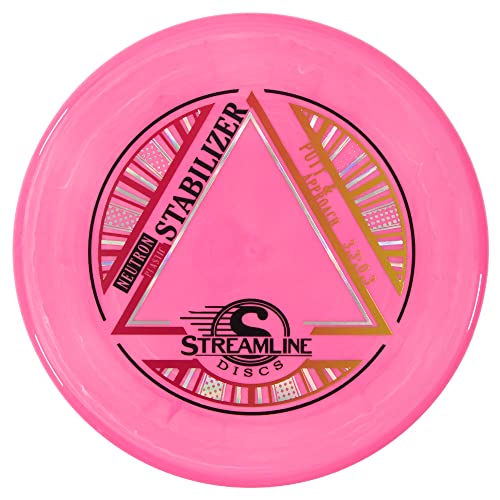
STREAMLINE STABILIZER - The Pilot is designed to be a go-to putter off the tee or on the approach! The Stabilizer has a similar hand feel and depth as the Neutron Pilot, but with a slightly raised shoulder and more pointed nose that produces a flatter and more stable putter.

Accurate swing technique: control your form using the golf swing training pad, which helps golfers maintain precise angles and transfer force optimally during practice,golf force pedal,golf yellow training pedal