
In the dance of disc golf, your backhand footwork is the silent rhythm that sets you free on the fairway. You’re aiming to glide through your motion, with your feet choreographing the perfect balance between control and power.
Start with your stance, letting your front foot point to the side, not directly at your target, to unlock your hips’ potential. As you stride into the X-step, remember it’s about fluidity, not rigidity. Keep your reach back and plant foot in sync; they’re partners in this dance, and timing is everything.
Embrace the weight transfer as you follow through, feeling the release as natural as a breath of fresh air. With practice, you’ll find your throws soaring with newfound freedom and precision.
Stance and Starting Position
Your initial stance should be comfortable and balanced, with your feet shoulder-width apart to ensure a stable foundation for your throw.
When you’re in your starting position on the tee pad, the entire sequence for a powerful drive begins with how you stand. Keep your weight centered and your body dynamically upright, ready to shift as needed.
As you begin your first step, plant your front foot firmly and perpendicular to the target. This is crucial for activating your hips and engaging with precision.
Your back foot, or rear foot, should be positioned to support this movement, ready to push off when the time comes. The front leg and back leg work in tandem, maintaining your stance integrity the whole time.
The X-Step Technique
In mastering the X-step for your disc golf backhand, it’s essential to synchronize your movements, ensuring each step propels you smoothly towards the release.
The X-step technique is a dance of precision, intertwining footwork, body weight transfer, and hip rotation to culminate in a powerful throw. Your plant foot’s pivot is the fulcrum of your momentum, avoiding any hopping that disrupts balance.
| Step | Focus | Outcome |
|---|---|---|
| Initial Step | Balance, Light on feet | Prepares body alignment |
| X-Step | Short, don’t overstep | Maintains center of gravity |
| Plant Foot | Pivot on ball, then heel | Enables hip rotation |
| Reach Back | Farther reach, level arms | Loads power pocket |
| Pulling Disc | Smooth, from power pocket | Maximizes speed, accuracy |
Practice pulling the disc from the power pocket with a leveled reach back to enhance your backhand’s efficacy. Remember, liberty in your movements is found within the discipline of technique.

QUIET - Reduces noice from basket chains for a quieter practice

PRACTICE BACKHAND OR FOREHAND: QOGIR disc resistance trainer is an excellent resistance training system for improving your disc golf arm speed. Great for enhancing your muscles and your muscle memory, this works both forehand and backhand driving techniques.Really help you build in the muscle memory to stop rounding.
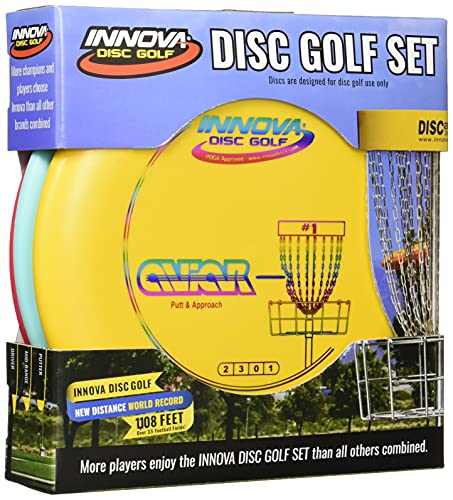
Complete Set: Includes One Driver, One Mid-Range And One Putter
Timing Your Reach Back
When you time your reach back correctly, you’ll ensure a more powerful and accurate backhand throw in disc golf.
To achieve this, coordinate the reach back with the plant of your right foot. As you perform the final step of the X-Step, simultaneously extend your throwing arm. This synchronicity is vital; it prevents premature hip opening and low release, allowing for full power transfer during the throw.
Your arm angle should mirror the desired flight path as you pull the disc across your body. To hit the power pocket, your shoulder and bicep should form a 90-degree angle, optimizing energy transfer. Maintain focus on the timing of these movements to refine your backhand throw, maximizing distance and accuracy with each release.
The Plant Foot Placement
Transitioning from the reach back, it’s essential you plant your front foot correctly to maintain balance and power throughout the throw.
For optimal disc golf backhand footwork, your plant foot placement is critical. Ensure your front foot is slightly ahead, not in a straight line with your back foot, to create a staggered stance. This position allows for a full hip rotation and drives power into your throw.
Your front foot needs to be perpendicular to your target, toes pointing straight ahead. This angle sets the stage for maximum power transfer and prevents early hip opening, which can rob you of max distance. Avoid the common mistake of a 45-degree foot angle or pointing directly at the target.
Precise plant foot placement fortifies your foundation for a powerful, accurate release.
How Important is Footwork in Mastering Disc Golf?
When it comes to mastering disc golf footwork, it is crucial for players to understand the significance of proper foot placement, balance, and weight transfer. Good footwork can significantly improve the accuracy and distance of throws, making it an essential skill for success in the game.
Follow-Through and Weight Transfer
You’ll notice a significant improvement in your throws once you master the art of shifting your weight from the ball of your foot to the heel during follow-through.
As you release the disc, focus on maintaining a low nose angle; ensure the nose of the disc doesn’t tilt upward. This control is pivotal for the aerodynamics of your throw in disc golf.
Your arm stays extended, and your back shoulder should come around, forming a smooth, continuous line with your arm. The weight transfer should feel natural and athletic, allowing you to effectively transfer energy from your body through the disc.
Ensure your follow-through completes at a degree angle that signals a full body rotation, maximizing power and precision.
Freedom in your form equates to freedom in your flight path.


COMPLETE SET: Includes one driver, one mid-range and one putter